 blog
Best Water Heater Installation in Hemet: How to Choose
Quick Summary
A good water heater installation in Hemet is sized correctly, connected safely, code-compliant, and backed by a written warranty. Ask for a written estimate that itemizes equipment, labor, permits, and old-unit disposal, and confirm the process includes a load assessment and valve checks.
- Get a load assessment so the unit is neither too small nor too large.
- Compare tank and tankless systems on upfront cost, operating cost, and peak demand.
- Ask whether the estimate includes permits, haul-away, and required code items.
- Confirm warranty terms in writing, including labor coverage from the installer.
- Verify a valid California contractor license and liability insurance before booking.
Table of Contents
- What a Good Water Heater Installation in Hemet Looks Like
- Tank vs. Tankless: Choosing the Right System for Your Home
- Water Heater Installation Cost in Hemet: What Affects Your Estimate
- Checking Reviews and Vetting Local Installers in Hemet
- Booking Your Water Heater Installation with Aim Plumbing California
- Frequently Asked Questions
What a Good Water Heater Installation in Hemet Looks Like
Last Updated: November 13, 2026
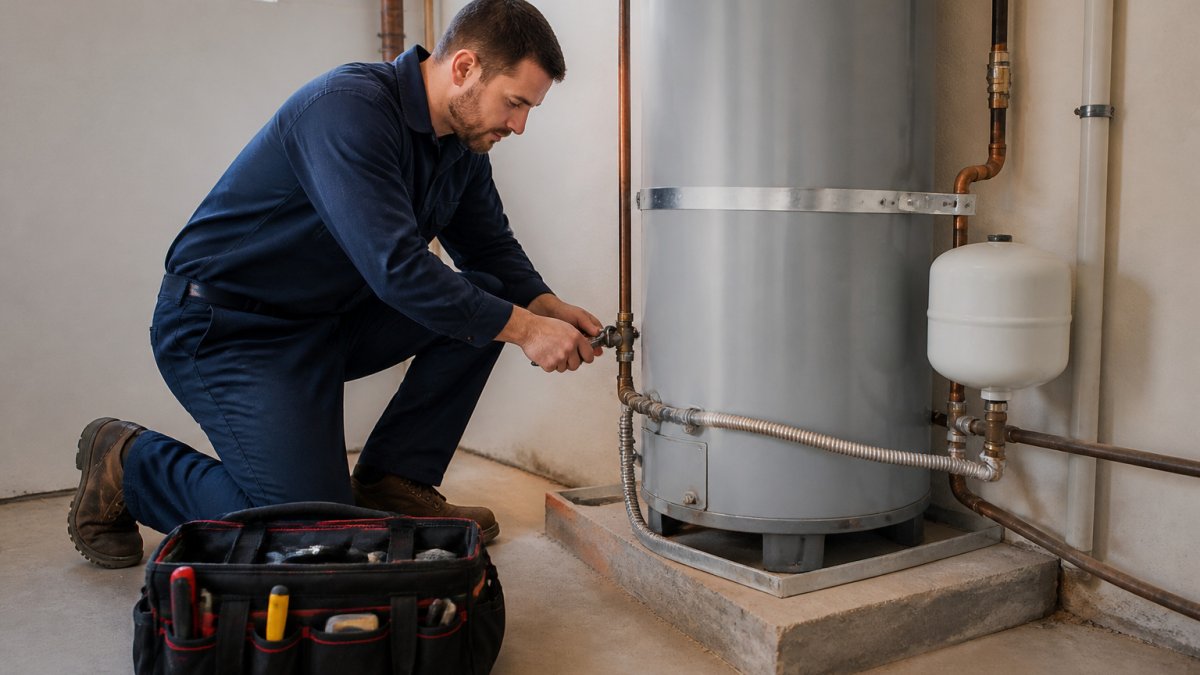
A good water heater installation is more than setting a tank in a closet. It should be sized correctly, connected safely, code-compliant, and backed by a written warranty. The installer's process matters as much as the equipment itself.
A solid installation generally includes a load assessment, a clear written estimate, a permit where required, proper venting or electrical connections, temperature and pressure relief valve checks, and a walkthrough of how the system works. If an installer skips these steps, problems tend to show up later as leaks, poor hot water supply, or failed inspections.
Watch out: a water heater that is too small for the household will run out of hot water early, and one that is too large wastes energy heating water you never use.
Tank vs. Tankless: Choosing the Right System for Your Home
Tank water heaters store and reheat a set volume of water, which makes them a straightforward choice for many households. Tankless units heat water on demand, which can save space and reduce standby energy loss. The right choice depends on household size, peak hot water use, available space, and fuel type.
A useful way to decide is to compare the two on the factors that actually change your experience and your bill:
- Upfront cost. A conventional tank typically costs less to buy and install. Tankless units cost more for the equipment and often require a larger gas line, a new electrical circuit, or upgraded venting, which raises the installed price.
- Operating cost. Tankless units avoid standby heat loss, so they can use less energy over time. Whether that saves money depends on how much hot water your household uses and local fuel and electricity rates. A tankless unit that is oversized for the household can erase much of the efficiency advantage.
- Capacity and peak demand. A tank delivers a stored volume and recovers over time. A tankless unit delivers hot water continuously but has a flow-rate limit, so simultaneous showers, laundry, and dishwashing can exceed its capacity. Households with high simultaneous demand sometimes need two tankless units or a larger tank.
- Space and venting. Tankless units free up floor space and can be wall-mounted. They still need venting and clearance, and some installations require a condensate line.
- Maintenance. Tankless units generally need periodic descaling, especially in areas with harder water. Tanks need annual flushing and anode rod checks.
- Lifespan. With proper maintenance, both types can last many years, but tankless units often have a longer expected service life, which partly offsets the higher upfront cost.
A conventional tank often suits homes with a limited budget and steady demand, while a tankless unit can suit homes where space is tight or hot water use is high. A tankless system often requires a larger gas line or electrical service, so ask any installer to confirm that before you commit. For more detail on comparing these options, see our guide to choosing between tank and tankless systems.
Gas, Electric, and Propane Options Compared
Gas water heaters are common in many areas and generally cost less to run than electric models, though the upfront installation can be higher when gas line work is needed. Electric models are simpler to install since they need no venting, but operating costs depend on local electricity rates. Propane units work well where natural gas is unavailable, though fuel delivery adds an ongoing expense.
| Type | Typical Strength | Main Consideration |
|---|---|---|
| Gas tank | Lower running cost | Venting and gas line requirements |
| Electric tank | Simple installation | Higher running cost in many homes |
| Propane tank | Works without natural gas | Fuel delivery and storage |
| Tankless (gas or electric) | Space savings, on-demand hot water | Higher upfront cost, may need upgraded service |
Watch out: a tankless unit sized only by the number of bathrooms can still run short if two showers and the dishwasher run at once, so ask the installer to calculate the flow rate for your actual fixtures.
Water Heater Installation Cost in Hemet: What Affects Your Estimate
Most homeowners want a ballpark before they call anyone. Installation cost is driven by a handful of variables, and a written estimate should show how each one applies to your home.
The main cost drivers are:
- Unit type and capacity. A standard 40- to 50-gallon tank is the most common replacement. Tankless units and high-capacity tanks cost more for the equipment and often for the installation work around them.
- Fuel source and existing infrastructure. A like-for-like gas tank swap is usually the simplest job. Switching from electric to gas, adding a gas line, upgrading an electrical panel, or running new venting adds labor and materials.
- Condition of the old unit and connections. Corroded fittings, a failed shutoff valve, or a pan that needs replacing add time. A straightforward removal and haul-away is faster.
- Permit and inspection fees. Many jurisdictions require a permit for water heater replacement, and the fee varies by authority. A written estimate should state whether the permit is included and who pulls it.
- Location and access. A garage or utility closet with clear access is easier than a tight attic, crawlspace, or second-floor closet where the old unit must be drained and carried out.
- Disposal and cleanup. Hauling away the old tank and disposing of it properly is a real cost that some quotes bury or omit.
A clear estimate should list the equipment, labor, materials, permit, disposal of the old unit, and any optional upgrades as separate lines.
For current pricing on your specific home, contact Aim plumbing California for a written quote that itemizes each line.
Checking Reviews and Vetting Local Installers in Hemet
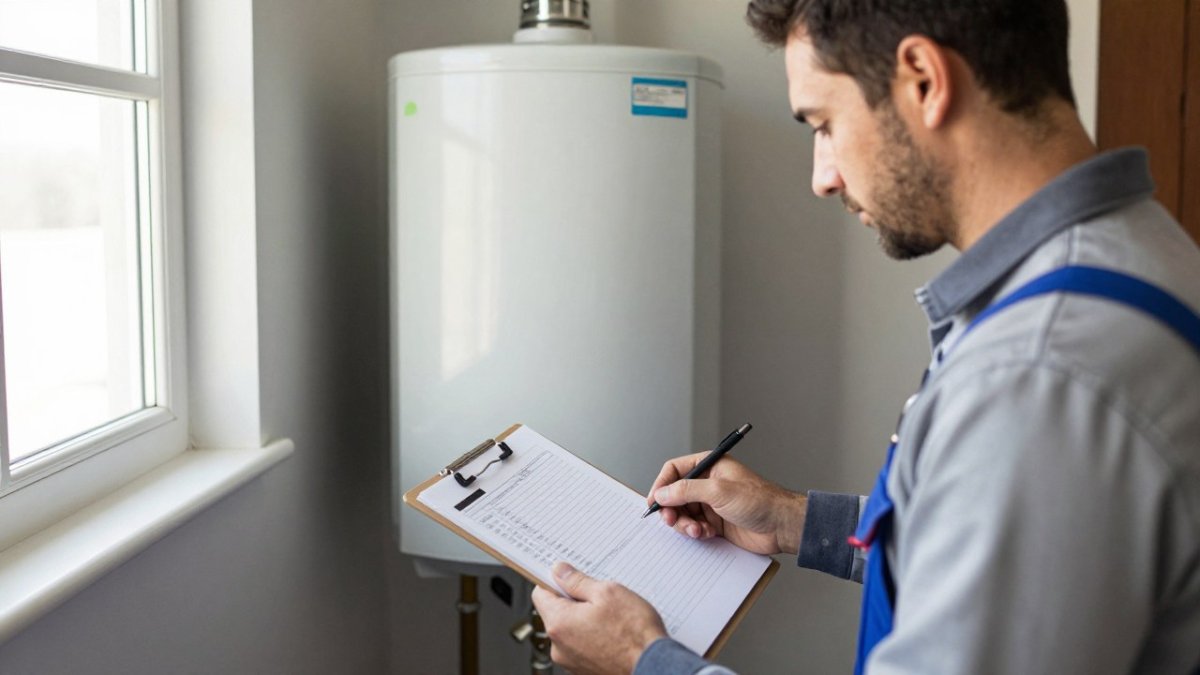
Start your search with customer reviews, but read them for specifics. Reviews that mention punctuality, cleanup, honest pricing, and follow-up service are more useful than generic star ratings. Also confirm the installer holds a valid California contractor license and carries liability insurance.
Ask every installer for references and proof of licensing before scheduling. Compare at least three written estimates so you can judge both price and what is included. For a structured approach, see our guide to finding reliable local plumbers and how to choose a commercial plumbing maintenance contract in Hemet if you manage a rental or multi-unit property.
Booking Your Water Heater Installation with Aim Plumbing California
If your current water heater is leaking, making unusual noises, or failing to produce hot water, schedule an evaluation before the problem becomes an emergency. Aim plumbing California can be contacted for installation, repair, and maintenance questions, and the team can be asked for a clear written estimate before any work begins.
Contact Aim plumbing California today for a quote on your hot water system.
Frequently Asked Questions
How much should I expect to pay for a water heater installation in Hemet?
Water heater installation prices depend on the unit type, fuel source, capacity, the condition of existing gas or electric lines, venting, and any required permit or inspection work. Aim Plumbing California does not publish a fixed price list, so pricing for your home is best confirmed with a written estimate. Ask the installer to itemize labor, equipment, materials, permits, and disposal of the old unit. A clear itemized estimate makes it far easier to compare bids and avoid a final bill that differs sharply from the quote. For current pricing, contact Aim Plumbing California directly through its website for a quote tailored to your home.
Is a tankless water heater installation worth it compared to a traditional tank?
A tankless water heater heats water on demand, so it does not store a full tank of hot water that you pay to keep warm. Many homeowners choose tankless systems for space savings and longer expected service life, while tank models usually cost less upfront and are simpler to install. Tankless installation often requires upgraded gas lines or electrical service, and the installer should confirm your household's peak hot water demand before recommending a unit size. Compare the upfront installation cost with estimated operating savings for your specific household and fuel type.
What should a water heater installation estimate include?
A complete estimate should list the water heater model and capacity, labor, materials such as venting, connectors, and valves, any gas or electrical work, required permits and inspections, removal and disposal of the old unit, and the warranty terms on both the equipment and the installation. It should also state the expected timeline. If an estimate leaves out permits or disposal, ask for those items to be added so the final invoice does not surprise you.
How do I choose a water heater installer in Hemet?
Confirm the company holds a valid California contractor license and carries liability insurance and workers' compensation coverage. Ask whether the installer pulls the required permits and schedules inspections, and whether the warranty covers both the unit and the workmanship. Read recent customer reviews for patterns in punctuality, pricing accuracy, and post-installation follow-up. Request a written estimate before work begins and compare at least two or three quotes that list the same scope of work.