 how-to
Emergency Plumbing Repair in Hemet: What to Do First
Quick Summary
For emergency plumbing repair in Hemet, your first priority is containment, not the permanent fix. Locate and close the main shutoff valve, usually near the water meter, garage, or where the line enters the house, then shut off power to any appliances near standing water.
- Locate the main shutoff valve, often near the water meter, garage, or where the line enters the house.
- Test the valve by opening a faucet; if water still flows, the valve may be stuck or the leak is upstream.
- If you smell gas, leave the home immediately and call your gas utility from outside.
- Stop using every drain and toilet during a sewage backup, since each flush adds volume to the blockage.
- Ask whether the diagnostic fee is credited toward the repair and get the estimate in writing before work begins.
Table of Contents
- Emergency Plumbing Repair in Hemet: Your First 15 Minutes
- Burst Pipe Repair: Triage by Symptom
- What an Emergency Plumber Cost Looks Like
- Finding a 24-Hour Emergency Plumbing Repair Service in Hemet
- Booking Aim Plumbing California for Your Emergency Call
- Frequently Asked Questions
Emergency Plumbing Repair in Hemet: Your First 15 Minutes
Last Updated: November 3, 2026
When a pipe bursts or a drain backs up at 2 a.m., the first 15 minutes matter more than most homeowners expect.
Emergency plumbing repair is any urgent fix that cannot wait, such as a burst supply line, a sewer backup, or a leak that is spreading into floors or walls.
How to Shut Off Water to a House
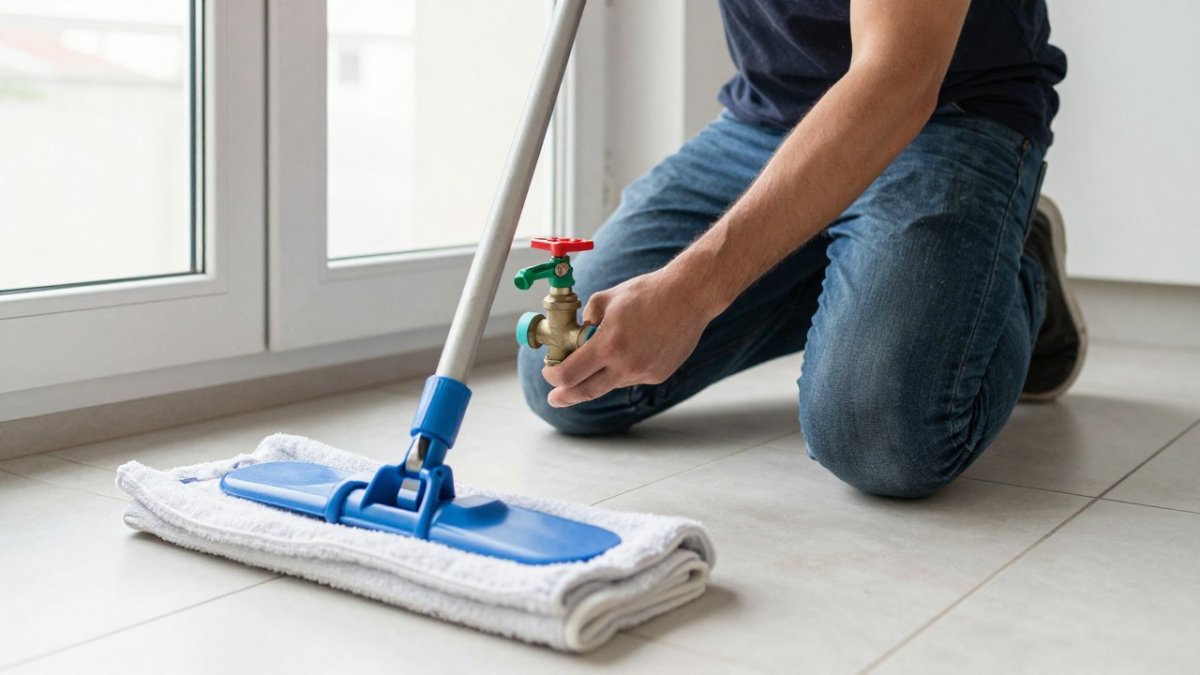
Locate the main shutoff valve first. In most Hemet homes, it sits near the water meter at the street, in a garage, or where the line enters the house. Turn it clockwise until it stops.
Test the valve after closing it by opening a faucet. If water still flows, the valve may be stuck or the leak sits upstream of it.
Safe Steps to Take Before the Plumber Arrives
Turn off the water first, then shut off power to any appliance near standing water, such as a water heater or dishwasher.
Move valuables, rugs, and furniture out of the wet area. Place towels, buckets, or a wet vacuum where water is pooling.
If you smell gas, leave the home immediately and call your gas utility from outside. Do not use light switches, phones, or flames inside the house.
Burst Pipe Repair: Triage by Symptom
Not every plumbing emergency needs the same response, and the fastest way to help a dispatcher is to describe what you are seeing in plumbing terms. Each of the four categories below has a different first move and damage profile.
Category 1: Burst Supply Line or Active Spray
A burst supply line announces itself: water spraying from a wall, a cabinet, or the line where it enters the house, often with a drop in pressure at every fixture. Shut off the main valve immediately, then open a low faucet to drain the remaining pressure.
A supply line that has been repaired with tape or a clamp is generally only a temporary measure, so schedule a permanent repair with a licensed plumber.
Category 2: Sewage Backup or Rising Drain Water
A sewage backup looks different from a supply leak. You may see water rising in a shower or tub when you flush a toilet, hear gurgling from multiple drains at once, or smell sewage in the lowest fixtures.
Sewage backups can be a health hazard, not just a mess. Avoid running a plunger or drain snake into a main-line backup, as this can push the blockage deeper or damage the line.
Category 3: Hidden Leak, Stains, or Meter Movement
Some of the most expensive leaks are the quiet ones. Brown rings on a ceiling, bubbling paint, a soft spot in drywall, or a baseboard that has started to swell all point to water inside a wall or ceiling cavity.
To confirm an active leak, close every faucet and appliance that uses water, then watch the water meter. If the leak indicator is moving with everything closed, water is escaping somewhere in the system.
Category 4: Water Heater Failure
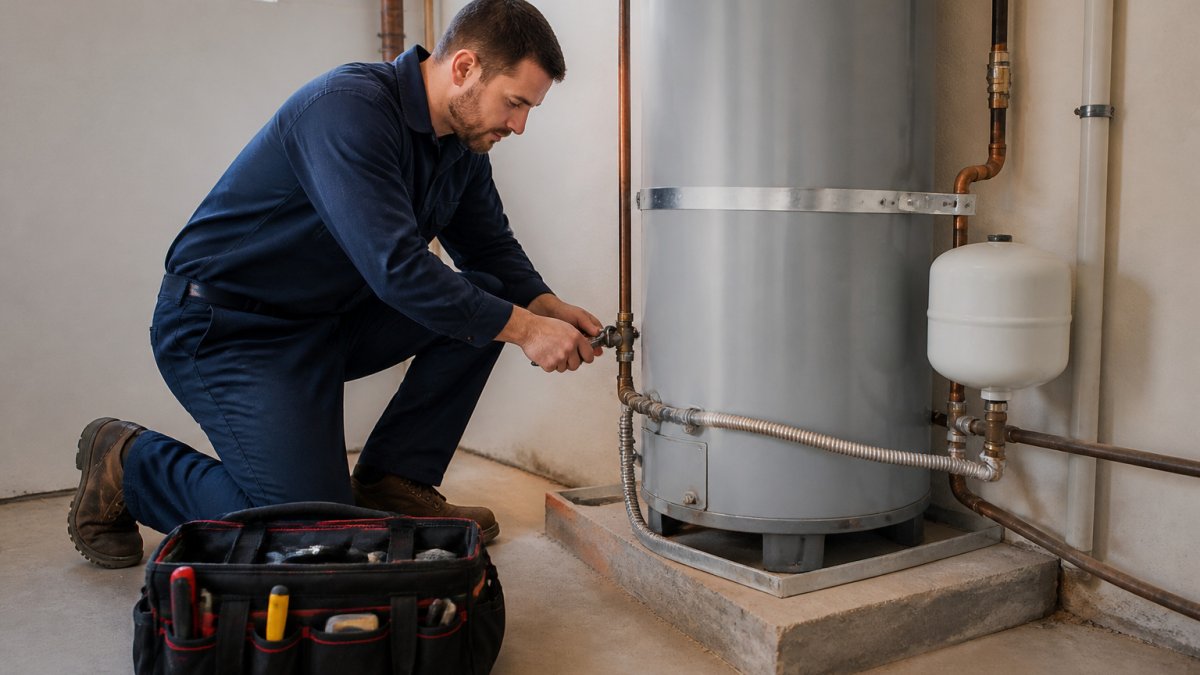
A water heater emergency usually shows up in one of three ways: no hot water, water pooling around the base of the tank, or a popping or rumbling sound followed by a temperature change. If you see water around a gas water heater, shut off the gas supply to the unit and the cold-water inlet valve on top of the tank, then keep the area clear. Do not relight a pilot or reset a breaker on a unit that has leaked, because the tank may be compromised.
A leaking tank is usually a replacement decision, while a failed heating element, thermostat, or pilot assembly is often repairable. Tell the dispatcher the age of the unit and whether the leak is from the tank body or a fitting on top.
What to Tell the Dispatcher
Once you have sorted the problem into one of these categories, it helps to give the dispatcher the symptom category, whether the main water valve is closed, the approximate age of the home or fixture, and whether water has reached electrical outlets, flooring, or the ceiling below.
Each symptom category calls for a different first move, so the table below summarises the response for each one.
| Category | First move | Watch for |
|---|---|---|
| Burst supply line or active spray | Shut off the main valve | Drop in pressure at fixtures |
| Sewage backup or rising drain water | Stop using every drain and toilet | Gurgling from multiple drains |
| Hidden leak, stains, or meter movement | Close all water use, then watch the meter | Brown rings or soft drywall |
| Water heater failure | Shut off gas and cold-water inlet | Water pooling around the base |
What an Emergency Plumber Cost Looks Like
Emergency plumbing pricing is built from a few predictable components, and understanding them lets you compare quotes instead of guessing. Emergency calls are often priced as a combination of a trip or diagnostic fee, an after-hours surcharge, labor, and parts. Some bundle the diagnostic fee into the repair price if you authorize the work; others charge it separately. Ask which model a company uses before anyone is dispatched.
The Fee Components to Ask About
- Trip or diagnostic fee. This covers the visit and the diagnosis. Ask whether it is credited toward the repair if you approve the work.
- After-hours surcharge. Evening, overnight, weekend, and holiday calls may carry a higher rate than weekday business hours. Ask when the surcharge starts and ends, because the boundary can fall in the middle of a job.
- Labor rate. Some companies charge a flat rate per job, others charge hourly with a minimum. Flat-rate pricing is easier to compare because the number does not move if the job takes longer than expected.
What Drives the Price Up or Down
The biggest cost variable is access, not the size of the pipe. A leak under a sink with a shutoff valve in reach is a short job; the same leak inside a wall, under a slab, or behind a finished ceiling takes longer and requires more labor and materials.
A quote given over the phone before anyone has seen the problem is an estimate, not a fixed price. Confirm in writing whether the number is a firm price or a range, and what happens if a second problem is found once the wall is open.
Questions to Ask Before You Authorize Work
- Is the diagnostic fee credited toward the repair if I approve the work?
- Is this a flat price for the job or an hourly rate with a minimum?
- Does the quote include parts, and are they under warranty?
- Will I get the estimate in writing before work begins?
- What is the warranty on labor, and what is the warranty on parts?
- If the job turns out to be bigger than expected, will you stop and re-quote before continuing?
Getting those answers in writing before the technician starts is the most effective way to avoid a surprise on the final bill. A reputable company should put the estimate in writing and explain what is covered and what is not.
Repair Versus Replacement Decisions
A repair makes sense when damage is limited to one section of pipe, one fixture, or a single valve, and the surrounding material is sound. Replacement becomes the better choice when pipes are corroded throughout, the same line has failed more than once, a water heater is near the end of its service life, or repeated repairs approach the cost of replacement.
Finding a 24-Hour Emergency Plumbing Repair Service in Hemet
Look for a plumber who lists after-hours availability clearly and will tell you their response window before dispatching a technician. Confirm the company is licensed and insured, and ask whether they offer a warranty on workmanship and parts. Reviews from past customers can also show how a company handles urgent calls.
Ask the dispatcher these questions when you call:
- Can you come out tonight, and what is the estimated arrival time?
- What will the diagnostic visit cost, and will it be credited toward the repair?
- Do you provide a written estimate before starting work?
Booking Aim Plumbing California for Your Emergency Call
When you need urgent help in Hemet, Aim Plumbing California is ready to respond. Visit the Aim Plumbing California website to request emergency service.
Frequently Asked Questions
How much does an emergency plumbing repair cost?
Emergency plumbing repair pricing depends on the type of problem, how much access work is needed, the parts involved, and whether the call happens after hours. Aim Plumbing California does not publish a standard price list in this article, so the most reliable step is to ask for an itemized quote before work begins. Request the trip charge, the hourly rate, and any after-hours surcharge in writing. For current pricing and a quote specific to your situation, contact Aim Plumbing California directly.
How do I shut off the water to my house?
Most homes have a main shutoff valve where the water line enters, often in a garage, utility room, or near the water meter. Turn the handle clockwise until it stops. If the valve is stuck or leaking, do not force it; call your utility or a plumber. If you cannot find the main, close the valve on the specific fixture or appliance that is failing. Once the water is off, open a faucet to drain remaining pressure.
What should I do first when a pipe bursts?
Shut off the water at the main valve first, then turn off the water heater or electric supply to it if water is near electrical outlets or fixtures. Open the faucets to relieve pressure and move valuables away from the water. Take photos of the damage for insurance, and mop or extract standing water as you can. Call a plumber for the repair, and document everything before cleanup.
When should I call an emergency plumber?
Call an emergency plumber right away if you have a burst or actively leaking pipe, a sewer backup into the home, no water to the house, a gas smell, or a water heater leaking from the base. Slow drains, a running toilet, or a dripping faucet can usually wait for a scheduled visit. If you are unsure, shut off the water and call; a delayed response to a major leak usually costs more in water damage than the service call itself.