 How-to
Why Plumbing Repairs Keep Failing and Coming Back
Last Updated: November 11, 2026
Quick Summary
Repeat plumbing repairs usually happen for one of two reasons: the fix treated the symptom instead of the source, or the work was rushed or used weak parts. A drip or leak that returns often has an underlying cause, such as worn valve seats, high water pressure, or corroded pipe, that was never addressed.
- Ask the plumber what caused the problem, not just what they replaced.
- Watch for quotes that omit the parts brand or grade and offer no written warranty.
- Sustained water pressure above 80 psi stresses every joint and fixture connection.
- Keep a repair log with dates, locations, symptoms, and stated causes to spot patterns.
- Run hot water and a high-demand appliance before signing off to test the repair.
Table of Contents
- Why Plumbing Repairs Fail to Last
- Repeated Drain Clogs Causes and What They Signal
- Recurring Pipe Leaks and Hidden Water Damage
- A Symptom-to-Root-Cause Checklist for Recurring Problems
- Questions to Ask a Plumber and Plumbing Repair Cost Before You Approve Work
- Booking Your Next Repair Visit with Aim Plumbing California
- Frequently Asked Questions
Why Plumbing Repairs Fail to Last
Most repeat plumbing repairs happen for one of two reasons: the fix treated the symptom instead of the source, or the work itself was rushed or used weak parts. Knowing these patterns can save you a second bill. Repeat plumbing repairs are not bad luck. They usually have a traceable cause.
Fixing the symptom instead of the source
A dripping faucet gets a new washer, and two months later it drips again. The washer was never the problem. Worn valve seats, high water pressure, or a corroded supply line were. Many homeowners find that a fix stops the visible problem but leaves the cause in place.
Ask the plumber what caused the problem, not just what they replaced. A good answer names a cause you can check.
Low-quality parts and rushed installation
Cheap fittings, undersized connectors, and skipped steps like proper pipe sealing or pressure testing often lead to leaks that return. Watch for these warning signs in a quote:
- No mention of the parts brand or grade
- Little or no time spent on testing after the repair
- A plumber who will not put the warranty in writing
The two main reasons repeat repairs fail are summarised below.
| Problem | Cause | Fix |
|---|---|---|
| Dripping faucet returns | Worn valve seats or high pressure | Find and fix the underlying cause |
| Leak comes back | Rushed work or low-quality parts | Use proper parts and pressure testing |
| Quote gives no part brand | Unclear parts quality | Ask for the brand or grade in writing |
| Warranty not in writing | Unclear callback terms | Get warranty terms before work starts |
Repeated Drain Clogs Causes and What They Signal
A clog that keeps coming back usually points to buildup inside the pipe, not a single blockage. Grease, food debris, and soap scum stick to pipe walls and catch hair or small debris over time.
A slow sink that drains fine after a plunge is often an early sign. Repeated clogs in several fixtures at once can point to a problem in the main drain line, which needs a camera inspection to confirm.
Recurring Pipe Leaks and Hidden Water Damage
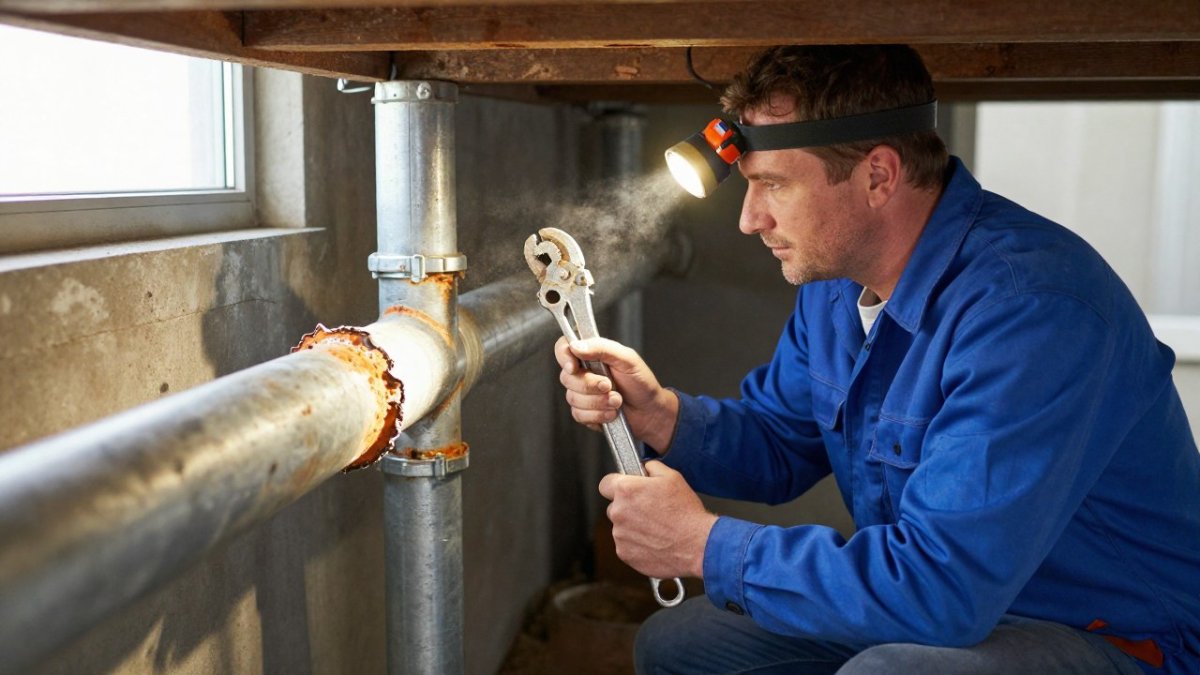
A leak that returns in the same spot is rarely a coincidence. Repeat leaks commonly trace back to one of four underlying conditions: internal corrosion, excessive water pressure, poor original installation, or movement and stress on the pipe. Each produces a different pattern, and identifying the pattern is what separates a lasting repair from a temporary patch.
The four root causes behind repeat leaks
Internal corrosion. Older galvanized steel pipes corrode from the inside out.
Excessive water pressure. Most residential plumbing is designed for pressure in the 40 to 60 psi range.
Poor original installation. Undersized connectors, missing dielectric unions between copper and steel, and joints that were not properly seated can fail years after the work was done.
Movement and stress. Thermal expansion, water hammer, and pipes that were not properly secured with hangers cause joints to flex.
How to tell a spot repair from a system problem
Use these signals to decide whether the leak is isolated or system-wide:
- The same pipe run has leaked more than once in twelve months
- Leaks have appeared at three or more separate fixtures or joints
- The water bill rises without a visible leak
If two or more of these apply, a spot repair will likely be followed by another leak. A camera inspection or pressure test can confirm whether the issue is localized or affects a larger section.
Hidden water damage checks
Look for these signs near the leak and in adjacent rooms:
- Musty smells or soft spots in flooring, baseboards, or drywall
- Water stains that grow or reappear after cleaning
- Paint or wallpaper that bubbles or peels without an obvious cause
Watch out: a leak that stops on its own after a repair can still be feeding moisture into a wall cavity, so confirm the repair with a pressure test rather than relying on a dry surface.
Stop the leak as soon as you can. Water damage spreads quickly and can lead to mold and structural damage. If the leak has returned more than once, ask the plumber to document the pipe condition and recommend whether a section replacement is more cost-effective than another spot repair.
A Symptom-to-Root-Cause Checklist for Recurring Problems
Use this checklist before calling a plumber for the third time:
- Write down the symptom, the date, and what was done last time
- Check whether the same fixture or pipe has failed more than once
- Look for pressure changes, staining, or moisture near the problem spot
If you check off three or more items, a repair history points to a root cause that needs a closer look.
Questions to Ask a Plumber and Plumbing Repair Cost Before You Approve Work
Repair costs depend on the problem, the access, the parts, and how far the repair reaches. Pricing depends on these factors, so a single number is not useful without a full quote. Ask for a written estimate that lists labor, parts, and any likely extra work.
Questions that separate a diagnosis from a patch
Ask these before you approve anything:
- What caused this problem, and how will the repair prevent it from coming back?
- What parts will you use, and what is their warranty?
- Is the quote firm, or could the final bill change?
A plumber who can name the cause and describe the test is more likely to fix the source. A plumber who only quotes a part and a price is quoting a symptom repair.
How to verify the repair before the plumber leaves
Verification is the step most homeowners skip, and it is the step that prevents repeat calls. Before the plumber packs up:
- Run the fixture or appliance through a full cycle and watch for drips or pressure changes
- Ask for a pressure test on any pipe repair, and ask to see the gauge reading
- Get the warranty terms in writing, including what counts as a callback and how to request one, and steps to verify your plumber warranty coverage show how to confirm it.
Watch out: a repair that looks dry immediately after the work can still leak once the system heats up or pressure stabilizes, so run hot water and a high-demand appliance before signing off.
Tracking repair history to spot a pattern
Keep a simple log with the date, the fixture or location, the symptom, the part replaced, and the plumber's stated cause. After two or three entries, patterns become visible: the same fixture failing, leaks migrating along a pipe run, or clogs returning in the same drain line. Share the log with the next plumber. A documented history is often what turns a series of spot repairs into a correct diagnosis.
When repeated repairs cost more than replacement
Compare the cumulative cost of repairs against the cost of replacing the fixture or pipe section. The same logic applies to water heaters, toilets, and older pipe runs: repeated fixes on an aging system often signal that the remaining life is short.
For current pricing and a written quote, visit the Aim Plumbing California website or contact the team directly. Pricing depends on your specific situation.
Booking Your Next Repair Visit with Aim Plumbing California
If your plumbing problem keeps coming back, the next step is a clear diagnosis rather than another quick patch. Contact Aim Plumbing California to discuss inspecting the cause and the repair options before any work starts. Contact the team to schedule a visit.
Frequently Asked Questions
How can I tell whether a plumbing repair fixed the root cause?
Watch the fixed area for at least two to four weeks, including a few heavy-use days. Check for returning symptoms such as slow drainage, dampness under a joint, a fluctuating water heater temperature, or a toilet that refills after flushing. Run water through the fixture, then inspect the pipe, fitting, or valve for moisture or staining. If the symptom returns in a new location or the same symptom comes back within weeks, the original repair likely treated the surface problem rather than the cause. A licensed plumber can pressure test the line or run a camera inspection to confirm.
Can repeated drain clogs mean there is a problem in the main sewer line?
Yes. When several fixtures drain slowly at the same time, or when a single clog returns soon after clearing, the blockage is often further down the drain line or in the main sewer line. Gurgling sounds from other drains, water backing up in a shower when a toilet is flushed, and sewage odors are common signs. Snaking the single drain only clears the nearest section. A camera inspection shows roots, grease buildup, offset joints, or collapsed sections that a basic clean will not solve.
When should a recurring plumbing problem be inspected by a licensed plumber?
Call a licensed plumber as soon as the same problem returns after a repair, or when you have two or more separate issues in the same system within a short period. Sewage backups, water pooling near the foundation, a sudden drop in water pressure, or a water heater that leaks should be addressed quickly to limit structural and water damage. Early inspection costs far less than repeated patch repairs or restoration work after water has spread.
What questions should I ask a plumber before approving a repair?
Ask what they believe the root cause is and how they confirmed it. Request a written, itemized estimate that lists labor, parts, and any diagnostic fees, and ask what could change the final bill. Confirm whether the work includes a warranty, how long it lasts, and whether it covers return visits for the same problem. Ask about the parts being installed, their brand and quality grade, and whether the plumber is licensed and insured in California. A clear answer to each question helps prevent surprise charges and repeat failures.