 ultimate-guide
Cost of Replacing Corroded Galvanized Pipes Explained
Last Updated: November 4, 2026
Quick Summary
Replacing corroded galvanized pipes depends on home size, pipe access, fixture count, material, and local labor rates, so costs vary widely and there is no single fixed price. For a written estimate for your home, contact Aim Plumbing California directly.
- Ask for estimated linear footage and a per-foot installed price to compare bids fairly.
- Pipes buried in plaster or concrete cost more because they require cutting and patching.
- PEX is usually the least expensive installed option, while copper is typically the most expensive.
- Confirm whether drywall, paint, and flooring restoration are included in each bid.
- Galvanized lines may contain lead, so have your water tested after replacement.
Table of Contents
- Why Corroded Galvanized Pipes Need Replacement
- Signs Your Home Needs a Repipe
- Average Cost of Replacing Corroded Galvanized Pipes
- Cost of Replacing Galvanized Pipes with PEX
- Cost to Replace Galvanized Pipes with Copper
- Galvanized Pipe Repair Cost vs. Repiping
- Will Homeowners Insurance Cover Corroded Pipes?
- Drywall Repair, Restoration, and Financing Options
- Booking Your Repipe Assessment with Aim Plumbing California
- Frequently Asked Questions
Why Corroded Galvanized Pipes Need Replacement
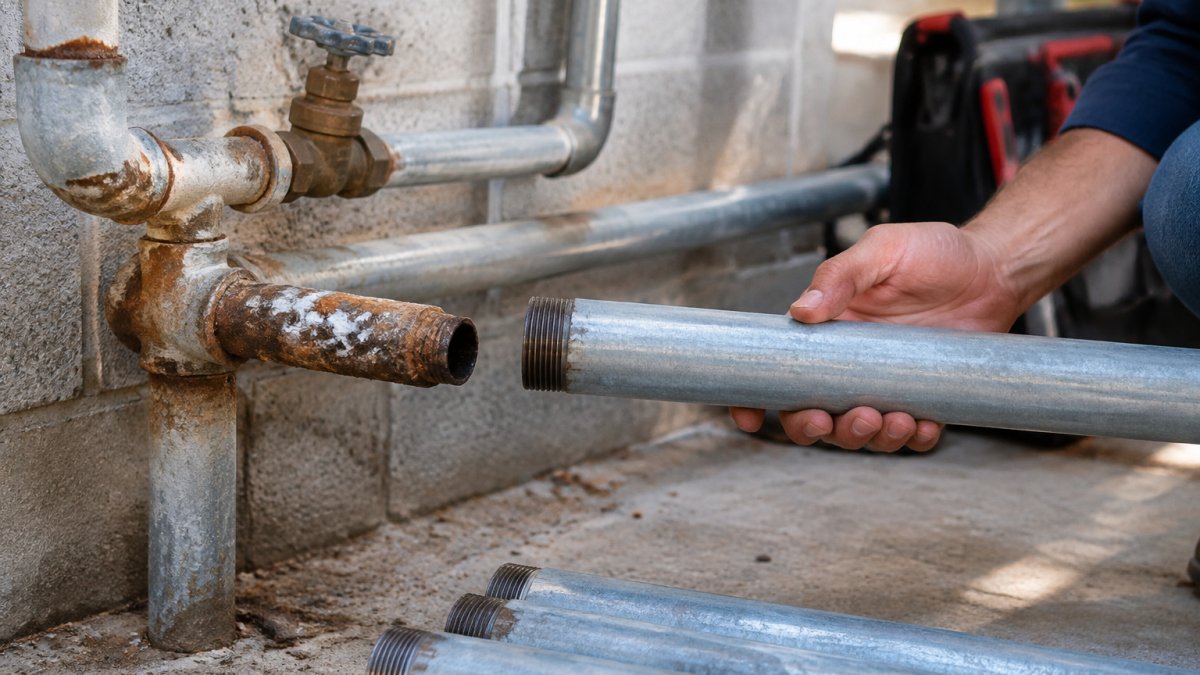
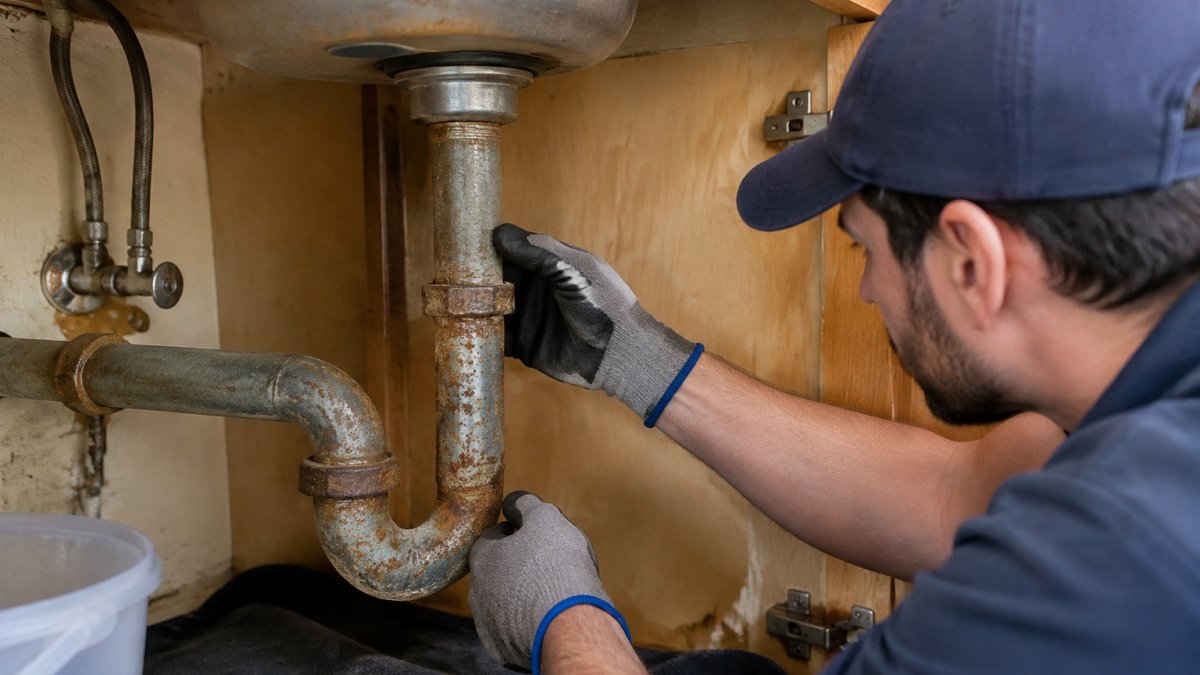
If your home was built before the 1960s, there is a good chance its water supply runs through galvanized steel pipe. Galvanized pipe is steel coated in zinc to slow rust, and for decades it was the standard for residential plumbing. Over time, that zinc layer wears away, and the steel underneath corrodes from the inside out. Corrosion can narrow the pipe, reduce water pressure, and eventually cause leaks. Replacing corroded galvanized pipes is usually a matter of when, not if, once the pipe reaches that stage.
Corrosion is not always visible. Inside the pipe, rust and mineral buildup, often called sediment, gradually reduce the diameter. Water that tastes metallic or runs rusty-brown is a sign the pipe is breaking down. Pinhole leaks, which start as tiny holes and grow, are another common outcome. Because the damage happens out of sight, many homeowners only find out during a leak or a drop in water pressure.
Signs Your Home Needs a Repipe
A full repipe is a bigger decision than fixing one leak, so it helps to know the warning signs. If you suspect a pipe failure right now, see the first steps to take immediately. Common indicators include:
- Water pressure that drops noticeably when multiple fixtures run at once
- Rust-colored or discolored water, especially in the morning after the water has sat in the pipes
- Frequent small leaks or recurring repairs in the same area
- Visible flaking, scaling, or rust on exposed pipe in the basement, crawl space, or utility room
- Pinhole leaks or water stains on ceilings and walls with no clear source
- A home built before the 1960s that has never had its supply lines inspected
If you notice several of these at once, have a licensed plumber inspect the pipes. The inspection usually includes a camera scope and a check of the main water line, since the condition of the whole system matters more than any single spot.
Average Cost of Replacing Corroded Galvanized Pipes
Repipe costs depend on home size, pipe accessibility, fixture count, and local labor rates, so pricing varies widely from one home to the next. For current pricing and an estimate for your home, contact Aim Plumbing California directly or request a written quote.
What drives the spread:
- Linear footage of pipe: The amount of supply line varies from home to home. More footage means more material and more labor hours.
- Material: PEX is usually the least expensive installed option; copper is typically the most expensive because of metal cost and soldering labor.
- Access and demolition: Pipes in an open basement or crawl space are cheap to reach. Pipes inside plaster, tile, or slab require cutting and patching, which is where budgets blow past the estimate.
- Fixture count: Each sink, toilet, tub, and appliance connection adds fittings and time. A three-bath home costs meaningfully more than a one-bath home of the same size.
- Permits and inspection: Most jurisdictions require a plumbing permit and inspection for a repipe. Permit fees vary by jurisdiction and project value, and the inspection adds a scheduling step.
- Restoration: Drywall patching, texture, paint, and any tile or flooring repair are often quoted separately. Ask explicitly whether restoration is in or out of the bid.
If a bid comes in dramatically below the others, check whether restoration, permit pulls, or wall access were left out of the scope.
Watch out: a quote that lists only a lump sum with no linear footage, material spec, or restoration scope cannot be compared fairly against another bid, and it is the most common way homeowners end up paying twice.
How Home Size and Pipe Accessibility Affect Pricing
Home size matters, but accessibility often matters more. A 1,200-square-foot house with pipes exposed in a crawl space can be cheaper to repipe than a 2,000-square-foot home where the lines are buried inside plaster walls and concrete slabs. Ask your plumber how the pipes are routed and whether they will need to open walls, floors, or ceilings. Access determines the labor hours, and labor is often the largest part of the cost.
A practical way to sanity-check a bid: ask the contractor for the estimated linear footage and the per-foot installed price for the chosen material. That single number lets you compare bids apples to apples even when the total project scopes differ.
The main factors that move a repipe estimate up or down are summarised below.
| Cost factor | What drives it | What to check |
|---|---|---|
| Linear footage of pipe | More supply line means more material and labor hours | Ask for estimated linear footage |
| Material | PEX is usually least expensive; copper is typically most expensive | Compare the same material across bids |
| Access and demolition | Buried pipes need cutting and patching | Ask how pipes are routed |
| Fixture count | Each fixture adds fittings and time | Confirm all fixtures are in scope |
| Permits and inspection | Most jurisdictions require them | Confirm permit fees are included |
| Restoration | Drywall, paint, and flooring are often quoted separately | Ask if restoration is in or out of the bid |
Cost of Replacing Galvanized Pipes with PEX
PEX (cross-linked polyethylene) is a flexible plastic pipe that has become one of the most common repiping materials in the United States. Its flexibility means fewer fittings and fewer joints, and it can often be routed through tight spaces with less demolition. Those same features often reduce labor time, which can offset its material cost compared with rigid options.
PEX is generally a practical choice for whole-house repiping. Confirm with your plumber that the product meets your local plumbing code and that the installer is familiar with PEX fittings and manifold systems. For current pricing, contact Aim Plumbing California and request a quote that breaks out PEX material and labor separately to compare fairly.
Cost to Replace Galvanized Pipes with Copper
Copper is a long-established plumbing material used in many residential systems. It is rigid, requires soldered or compression fittings, and typically costs more in materials than PEX. Copper can be a good fit for homeowners who want a traditional, durable option and whose plumber is experienced with soldering.
The main trade-off is that copper installations often take more labor, and the metal's price can fluctuate. When comparing quotes, make sure each contractor is pricing the same scope, including the same pipe diameters, fittings, and restoration work.
Galvanized Pipe Repair Cost vs. Repiping
Repairing a single leak is almost always cheaper in the short term than repiping the whole house. The question is whether the repair will last. If the galvanized pipe is thin, scaled, or has leaked in several places, patching one section often means the next leak is a matter of months away. Each repair carries its own cost, and those costs can add up to a meaningful share of a full repipe over a few years.
A useful rule of thumb: if the pipe is corroded throughout rather than in one isolated spot, a repipe usually makes more financial sense. If the damage is localized and the rest of the system tests well under pressure, a targeted repair may be the better choice. Ask your plumber to show you the condition of the pipe in several locations, not just the leak.
Will Homeowners Insurance Cover Corroded Pipes?
The short answer most homeowners get: standard homeowners policies exclude damage caused by wear, corrosion, and lack of maintenance, so the repipe itself is almost never covered. What policies commonly do cover is the sudden and accidental water damage that results, soaked drywall, ruined flooring, damaged belongings, up to policy limits and subject to your deductible. Read your policy's exclusions section and call your insurer before you file so you understand which side of that line your situation falls on.
There is a second insurance angle most cost guides skip entirely: coverage eligibility and premiums after a repipe. Insurers increasingly ask about the age and material of a home's plumbing. A home with documented, updated supply lines is generally viewed as lower risk than one with original galvanized pipe, and some carriers offer discounts or preferred pricing for verified updates. Conversely, a history of repeated water-damage claims tied to failing pipes can affect renewal or pricing. After the work is done, ask your agent whether the repipe qualifies for any credit and make sure the update is noted on your policy, documentation is what makes the difference.
Document everything if a leak occurs. Take photos before and after the damage, keep the plumber's invoice and the failed pipe section if possible, and save receipts for any temporary housing or cleanup. Your insurer will want evidence to evaluate the claim. Keep the repipe permit and final inspection record as well; those documents support both future claims and any coverage review.
Watch out: galvanized supply lines can contain lead, and disturbing them during a repipe can release sediment into the water. After replacement, run the taps and have your water tested, many utilities offer free or low-cost lead testing kits, and a certified lab test is the only way to confirm the new system is clean. Do not assume new pipe alone solves a lead problem that originated in the service line or interior fixtures.
Drywall Repair, Restoration, and Financing Options
Repiping often means opening walls and ceilings, and the restoration can be a substantial part of the total job. Drywall repair, texturing, painting, and flooring work can add significant expense, so ask whether your quote includes restoration or only the plumbing work. Some contractors price restoration separately, which is worth knowing before you compare bids.
If the project cost is more than you can cover upfront, ask about financing. Options may include a home equity loan, a home equity line of credit, a personal loan, or a payment plan through the contractor. Each has different interest rates, fees, and risks, so compare the total repayment cost, not just the monthly payment. A financial advisor can help you choose the option that fits your situation.
Booking Your Repipe Assessment with Aim Plumbing California
The most useful next step is a professional assessment. Aim Plumbing California can inspect your galvanized supply lines and outline repair and repipe options for your home. For current pricing and availability, contact Aim Plumbing California directly or request a written quote. The assessment will give you a clear picture of what your home needs before you commit to any work. If you are still comparing service options, read how to choose a water heater installation service.
Frequently Asked Questions
Is it worth it to replace galvanized pipes?
In most homes, yes. Galvanized steel pipes corrode from the inside, which narrows the pipe, reduces water pressure, and can cause pinhole leaks that lead to water damage. Once corrosion is widespread, repairs become a recurring expense. Replacing the whole system with PEX or copper typically costs more upfront but removes the risk of repeated failures. Get a written assessment from a licensed plumber that shows the pipe condition before deciding.
Will homeowners insurance cover corroded pipes?
Most standard homeowners policies cover sudden, accidental water damage, such as a burst pipe, but usually exclude the cost of fixing the pipe itself and damage caused by long-term corrosion or wear. Coverage varies by policy and insurer, so review your declarations page and ask your agent directly. Keep photos, plumber invoices, and repair records in case you need to file a claim.
Is it expensive to replace galvanized pipes?
A full repipe is a significant expense for most homeowners, and the final cost depends on home size, the number of fixtures, pipe accessibility, and local labor rates. Pricing varies widely, so request a detailed written quote from Aim Plumbing California for an accurate estimate based on your home. Comparing itemized quotes helps you avoid surprises at the end of the job.
What is the life expectancy of galvanized steel plumbing pipes?
Galvanized steel pipes often last several decades, but lifespan depends heavily on water chemistry, pipe thickness, and installation quality. Many homes built before the 1960s and 1970s still have original galvanized lines that show internal rust and sediment buildup. If you notice rusty water, weak water pressure, or frequent leaks, a professional inspection can show how much service life remains.
Can corroded galvanized pipes be repaired instead of replaced?
Spot repairs can stop an active leak, but they rarely fix the underlying problem when corrosion is spread throughout the system. Patching one section often leads to new leaks nearby. A repair makes sense when only a short run is damaged and the rest of the system is in good condition. Otherwise, a full repipe usually proves more cost-effective over time.