 How-to
How to Avoid Hidden Plumbing Fees: A 2026 Guide
Last Updated: November 7, 2026
Quick Summary
To avoid hidden plumbing fees, ask for a written, itemized estimate before any work starts, and confirm every add-on charge in writing. Ask about trip, diagnostic, after-hours, and permit fees, and whether trip or diagnostic fees are credited toward the repair.
- Ask whether the trip or diagnostic fee is credited toward the repair if you approve the work.
- Require a line-by-line estimate that lists labor rate, each part, permit costs, and payment terms.
- Get after-hours and weekend rates in writing before the visit.
- Approve any extra work in writing after seeing its revised price.
- Compare quotes only after adding every fee and matching the scope of work.
Table of Contents
- Step 1: Learn the Common Add-On Charges
- Step 2: Build a Plumbing Estimate Checklist
- Step 3: Ask Questions to Ask a Plumber Before Hiring
- Step 4: How to Compare Plumbing Quotes Side by Side
- Step 5: Read the Plumbing Repair Cost Breakdown
- Protecting Yourself When Extra Work Appears
- Booking Your Next Plumbing Visit with Aim Plumbing California
- Frequently Asked Questions
A plumbing quote is only as good as the questions behind it. Many homeowners sign off on a repair that sounds fair, then get a final bill that is far higher because of hidden plumbing fees. This pattern is common, and most of it is avoidable with a few simple checks before work starts.
The gap usually comes from charges that never appeared on the first conversation. A trip fee gets added at the door. A diagnostic fee is billed separately from the repair. Parts get marked up. Extra work turns up once the wall is opened. None of this is unusual in the trade, but it is confusing when you did not expect it.
Here is the plan. We will walk through the common add-on charges, a checklist for your estimate, the questions to ask before you hire, and how to compare quotes fairly. Each step is practical and meant to be used on your next call.
Step 1: Learn the Common Add-On Charges
Knowing the names of the extra charges makes them easier to spot. Ask about each one before you agree to a price.
Trip, Dispatch, and Diagnostic Fees
A trip or dispatch fee covers the cost of sending a technician to your home. A diagnostic fee pays for finding the problem. Some companies waive these if you approve the repair, and some do not.
- Trip or dispatch fee: a flat charge for getting to your door
- Diagnostic fee: a charge for inspecting the leak, clog, or fault
- Ask: Is this fee credited toward the repair if I approve the work?
After-Hours, Weekend, and Emergency Surcharges
Calls outside normal business hours often cost more. A plumber who comes at night or on a holiday may charge a higher rate or a flat surcharge.
- After-hours rate: a higher hourly rate outside standard hours
- Weekend or holiday rate: often a set premium
- Emergency fee: a charge for urgent same-day service
Ask for the exact rate in writing before the visit, so hidden plumbing fees do not surprise you later. An emergency can make it tempting to skip this step, so ask even under pressure.
The charges below are the ones most likely to show up on a final bill, so ask about each before you agree to a price.
| Charge | What it covers | Ask |
|---|---|---|
| Trip or dispatch fee | Sending a technician to your home | Is it credited if I approve the repair? |
| Diagnostic fee | Finding the leak, clog, or fault | Is it credited toward the repair? |
| After-hours rate | Work outside standard hours | What is the exact rate in writing? |
| Weekend or holiday rate | Often a set premium | What is the premium amount? |
| Emergency fee | Urgent same-day service | What is the flat charge? |
Step 2: Build a Plumbing Estimate Checklist
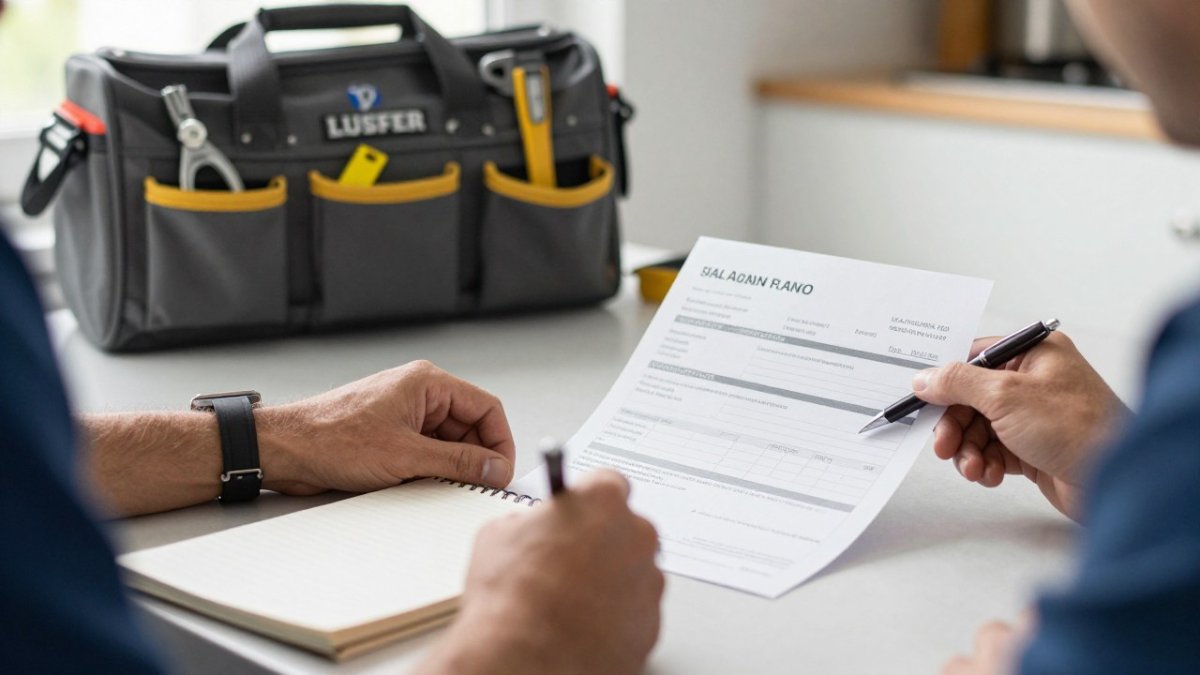
A written estimate protects you only if it is specific enough to compare against the final invoice. Use this checklist to confirm the estimate covers the full job, and use the definitions below to tell a legitimate line item from an unexplained add-on.
What Each Line Item Should Say
- Labor rate and minimum charge. The hourly rate, the minimum billed time (often one hour), and whether the minimum applies even if the job finishes faster. Ask whether the rate changes for a second technician on site.
- Trip, dispatch, and diagnostic fees. The flat amount for each, and a written statement of whether the trip or diagnostic fee is credited toward the repair if you approve the work.
- Each part or material, listed separately. The item, the brand or grade, the quantity, and the unit price. "Parts" as a single lump sum is not a line item.
- Permit and inspection costs. The permit fee itself, who pulls the permit, and whether a separate inspection charge applies. Ask who is responsible for scheduling any required inspection.
- Scope of work in plain language. What is being replaced or repaired, where, and what is explicitly excluded (for example, wall patching or drywall repair after access).
- Payment terms. Deposit amount, when the balance is due, and accepted payment methods. A large upfront deposit with no written schedule is a warning sign.
- Warranty on parts and labor. The length of each, what voids it, and whether it is transferable.
- A written-approval clause for extra work. A sentence stating that no additional work proceeds without your written or documented approval.
What a Realistic Itemized Estimate Looks Like
A clear estimate reads like a short scope document, not a single number. A clear estimate for a water heater replacement should itemize the work, including removal of the old unit, the new unit, labor, any permit fee, and a note on any code upgrades that would be quoted for approval before proceeding.
If the estimate reads "plumbing repair, $800," ask for a line-by-line breakdown before you sign. A clear estimate is the best defense against an unexpected bill.
Watch out: an estimate that lists a total but omits the labor rate, the parts breakdown, or the permit line gives you nothing to compare against the invoice later.
Step 3: Ask Questions to Ask a Plumber Before Hiring
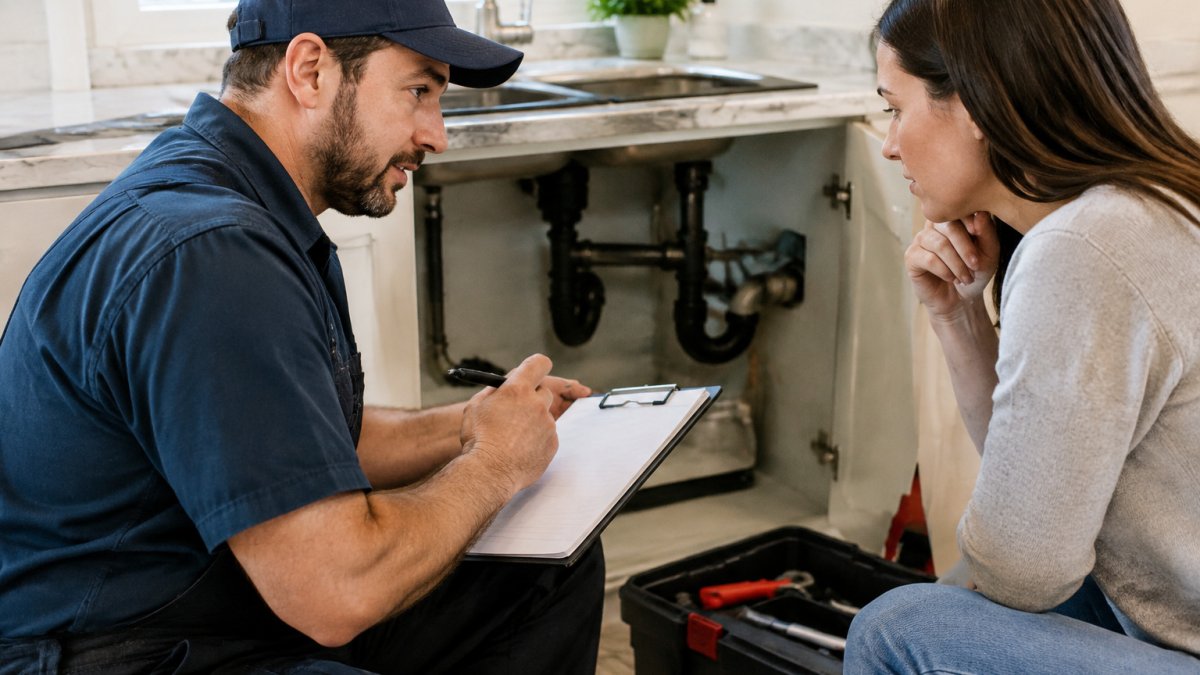
Before you book, ask a few direct questions. Good plumbers answer them without hesitation.
- Do you provide a written, itemized estimate before starting?
- What fees apply besides the repair itself?
- What is your rate for after-hours or weekend work?
- Do you charge for parts at cost, or is there a markup?
- Will you call me for approval before doing any additional work?
- Are you licensed and insured, and can I see proof?
- What warranty covers your labor and the parts you install?
Write down the answers. If a company refuses to put pricing in writing, treat that as a warning sign.
Step 4: How to Compare Plumbing Quotes Side by Side
Two quotes can look different even when they cover the same job. To compare them fairly, put both on the same footing.
- Match the scope: confirm both cover the same pipes, fixtures, and work area
- Add every fee: include trip, diagnostic, and permit costs to each total
- Check the parts: make sure both list the same brand grade or quality level
- Look at the warranty: a cheaper quote with no warranty may cost more later
A simple method: write the total for each quote, then subtract any fees that are not included in the other. This shows the true difference.
Be cautious of a quote far below the others. It may leave out fees or assume a smaller job than you actually have.
Step 5: Read the Plumbing Repair Cost Breakdown
A good cost breakdown separates labor, parts, and fees, and it should match the estimate you approved line for line. Read it in this order. To understand what replacing corroded pipes involves, see Cost of Replacing Corroded Galvanized Pipes Explained.
- Labor: the hours billed and the rate, including any minimum. Compare the billed hours to the estimate. If the job ran longer because of a problem the plumber found, there should be an approved change order for it.
- Parts and materials: the item cost and any markup. Check that the brand and grade match what the estimate specified. A substituted part at the same price is a scope change, not a courtesy.
- Fees: trip, diagnostic, after-hours, and permit charges. Confirm each one was disclosed before the visit and that any promised credit was actually applied.
- Total: the sum, with tax if it applies. Ask if a tax line looks unfamiliar, since tax treatment can vary.
Repair costs vary by job type, so a quote for a clogged drain will not look like a quote for a water heater replacement. Use the breakdown to see what drives the price, not just the final number.
How to Compare Two Invoices or Estimates Apples to Apples
Put both documents on the same footing before you judge which is cheaper:
- Match the scope. Confirm both cover the same fixtures, pipe runs, and access work. A lower total that excludes drywall repair or disposal is not the same job.
- Add every fee. Include trip, diagnostic, permit, and after-hours charges in each total so you are comparing all-in numbers.
- Compare materials. Check brand, grade, and warranty length. A builder-grade part and a premium part are not interchangeable even at the same labor rate.
- Compare warranties and exclusions. A cheaper quote with a 30-day labor warranty and a broad exclusion list may cost more over time than a higher quote with a one-year warranty.
When a Charge Looks Wrong
If a line item on the invoice was not in the estimate, ask for the approved change order that authorized it. If there is none, request a corrected invoice in writing before you pay the disputed portion. Keep copies of the estimate, the invoice, and any text or email approvals.
If the company will not resolve it, ask for the itemized invoice and a written explanation of the charge, then contact your state or local consumer protection office and the licensing board that regulates plumbers in your area. Licensing boards that regulate plumbers in your state may accept billing complaints, and your state attorney general's consumer protection office is another route for unresolved billing disputes.
Watch out: paying the full invoice before you have compared it to the estimate gives up most of your leverage, so review the breakdown first and put any dispute in writing before the balance is due.
Protecting Yourself When Extra Work Appears
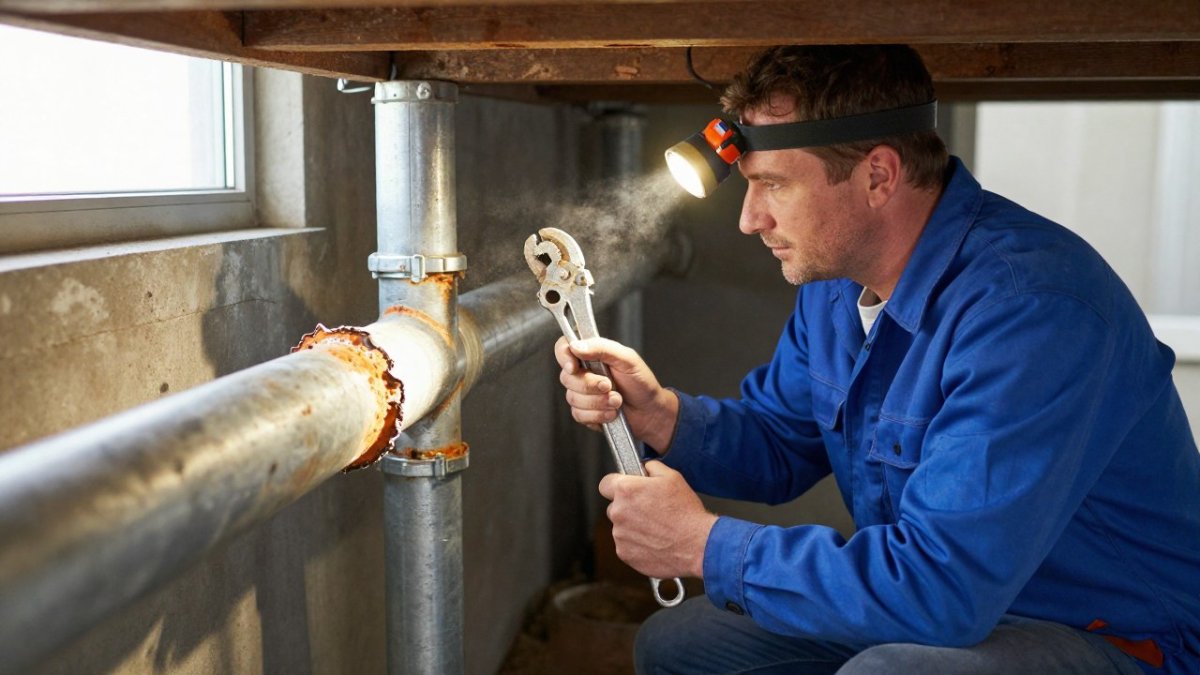
Sometimes a plumber finds a problem that was not in the original scope, such as corroded pipes behind a wall. This is where many surprise bills start.
Follow these steps when extra work appears:
- Stop and ask the plumber to explain the new problem in writing
- Request a revised estimate with the added cost
- Approve the extra work only after you see the new price
- Keep copies of every estimate and invoice
You have the right to refuse work you did not approve. If a dispute arises, ask for an itemized invoice and compare it to your written estimate. Your state consumer protection office can also help with billing complaints (How to file a complaint about a company’s products or services).
Some issues, like corroded galvanized pipes, can grow costly if left alone. Understanding the likely scope before you decide helps you weigh your options.
Booking Your Next Plumbing Visit with Aim Plumbing California
Hidden fees are easiest to avoid when you know the questions to ask before work begins. Contact Aim Plumbing California through our website to request a quote for your next plumbing job.
Frequently Asked Questions
How can I avoid hidden fees when hiring a plumber?
Ask for a written, itemized estimate before any work starts. It should list labor rates, parts and materials with markup, trip or dispatch fees, diagnostic charges, and any after-hours or weekend surcharges. Confirm in writing that the total will not change without your approval, and ask the plumber to call you before performing any additional work. Keep copies of every estimate and invoice so you can compare them if a bill grows.
What should a plumbing estimate include?
A useful plumbing estimate describes the scope of work, the parts and materials to be installed, the labor rate or flat price, and every fee that could apply, such as a trip charge, diagnostic fee, or permit cost. It should also state payment terms, cancellation rules, and the warranty on both parts and labor. If a line item is vague, ask for a clear explanation before you sign.
Can a plumber charge more than the quoted price?
A plumber can charge more if the job changes, such as when hidden damage is discovered behind a wall. A legitimate change should be explained and approved by you before the extra work is done. If a plumber adds charges without your written approval, ask for an itemized invoice and compare it with your original estimate. Your state consumer protection office or licensing board can advise you on next steps if the dispute is not resolved.
Should I get multiple plumbing quotes?
Getting at least two or three written quotes is a practical way to spot unusually high pricing or missing line items. Make sure each quote covers the same scope of work, uses the same type of parts, and lists the same fees. Comparing quotes on an apples-to-apples basis is more useful than choosing the lowest total, because a low price can hide add-on charges that appear later.