 How-to
What to Do When a Burst Pipe Floods Your Home
Last Updated: November 14, 2026
Quick Summary
When a burst pipe floods your home, shut off the main water valve first, then cut power to any wet rooms at the breaker panel. Contain the water, document the damage, and call an emergency plumber with your address, the water source, and whether the valve and power are off.
- Turn the main valve clockwise until it stops, then open a low faucet to drain pressure.
- Never touch the breaker panel if water is dripping near it; call an electrician or utility first.
- A burst pipe causes gushing water and a sudden pressure drop at every fixture, unlike a slow leak.
- Tell the dispatcher your address, water source, valve status, and whether power is off.
- Most burst pipe repairs take a few hours once the technician arrives, depending on access.
Table of Contents
- What to Do When a Pipe Bursts
- How to Tell a Burst Pipe Apart From a Slow Leak
- What to Tell an Emergency Plumber When You Call
- Burst Pipe Repair Cost and What Moves the Estimate
- How Long Does Burst Pipe Repair Take
- Water Damage Cleanup, Documentation, and Insurance
- Book an Emergency Plumber in Hemet
- Frequently Asked Questions
What to Do When a Pipe Bursts
Water is spraying behind the washing machine, the ceiling is sagging, and every second counts. If you are dealing with a plumber Hemet emergency burst pipe situation, the first move is simple: shut off the water, then cut the power to wet areas. This guide walks you through what to do when a pipe bursts, from the first minute to the repair estimate, so you are not guessing while your floors soak.
A burst pipe is a plumbing failure where a pressurized water supply line splits or cracks, releasing water continuously until the supply is shut off. The difference between a small cleanup and a flooded home usually comes down to how fast you act in the first few minutes.
Here is the order that matters most:
- Shut off the main valve
- Kill power to wet rooms
- Contain and document the water
- Call for emergency plumbing help
Below, we explain each step, what to tell the dispatcher, and what drives the final bill.
Shut Off the Water at the Main Valve
Find your main shutoff valve and turn it clockwise until it stops. On most homes it sits near the water meter or where the supply line enters the house, often in a basement, garage, or utility closet.
If the valve is stiff, use a wrench or pliers on the handle rather than forcing it by hand. Gate valves need several full turns; ball valves stop at a quarter turn. Once the water stops, open a low faucet to drain pressure from the lines.
Watch out: never assume the valve will turn easily after years of sitting. Test it once a year so a plumbing emergency does not turn into a hunt for a seized handle.
Contain the Water and Cut the Power
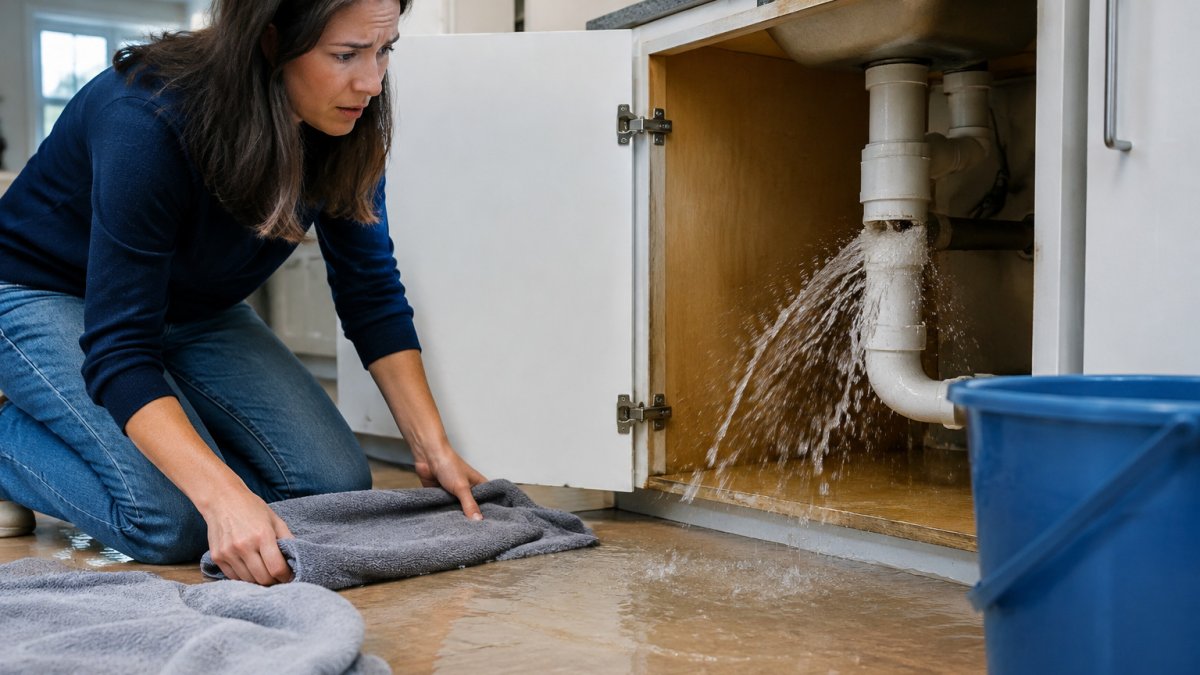
Soak up what you can with towels and buckets, and move furniture, rugs, and electronics away from the wet zone. Then cut power to any room with standing water or water near outlets.
Go to your breaker panel and switch off the circuits serving those areas. If water is dripping near the panel itself, do not touch it. Call an electrician or the utility first.
Water and electricity are a dangerous pair. When in doubt, leave the breaker alone and keep everyone out of the room until help arrives.
How to Tell a Burst Pipe Apart From a Slow Leak
A burst pipe usually announces itself: a sudden spray, a pop sound, or water pouring from a wall. A slow leak shows up as a stain, a musty smell, or a rising water bill instead. The two problems call for different responses, so it helps to compare them side by side before you start opening walls.
| Signal | Burst pipe | Slow leak |
|---|---|---|
| Water flow | Gushing or spraying under pressure | Drip, seep, or damp patch |
| Sound | Pop, bang, or running water when nothing is on | Occasional drip or none |
| Water pressure | Sudden drop at every fixture | Gradual decline over weeks |
| Visible damage | Bulging ceiling, bowed wall, pooled water | Brown ring, peeling paint, musty odor |
| Water bill | Normal until the event, then a spike | Creeping increase month over month |
| Timeline | Minutes to hours | Days to months |
A burst pipe is a pressure failure. When a supply line splits, water escapes faster than the system can replace it, so pressure at every fixture drops at once. That whole-house pressure loss is one of the clearest signs you are dealing with a burst rather than a drip.
Signs point to a burst rather than a drip:
- Water gushing or spraying under pressure
- A bulging ceiling or wall
- Sudden drop in water pressure at every fixture
- The sound of running water when nothing is on
- A pop or bang followed by water where no water should be
Slow leaks are quieter. You might notice a brown ring on the ceiling, peeling paint, or a damp spot that never dries. A slab leak under concrete can show up as a warm spot on the floor, a hairline crack that keeps returning, or an unexplained jump in your bill.
If you are not sure which problem you have, check the signs of a burst pipe and water damage before you start tearing into drywall. Confirming the source early saves money and guesswork.
Watch out: do not assume a slow leak is harmless because it is small. A pinhole leak in a copper line can erode into a burst without warning, especially in older homes where pipes have thinned.
What to Tell an Emergency Plumber When You Call
Give the dispatcher four things fast: your address, where the water is coming from, whether the main valve is closed, and whether power is off in the wet areas.
A good emergency call sounds like this:
"Water is pouring from a pipe under my kitchen sink. I shut off the main valve and killed the breaker to the kitchen. The floor has about an inch of water."
Add anything that changes the response: a water heater leaking, a sewer smell, water near the electrical panel, or a ceiling that looks ready to collapse. Mention if the property is a rental or a multi-unit building.
Ask two questions before you hang up: what the service call costs and when the plumbing technician will arrive. A reputable company gives you a clear arrival window and a written repair estimate before work starts.
Burst Pipe Repair Cost and What Moves the Estimate
Pricing for burst pipe repair depends on where the pipe failed, how hard it is to reach, and how much water damage came with it. Pricing depends on these factors, so for current prices or a quote, check the Aim Plumbing California website.
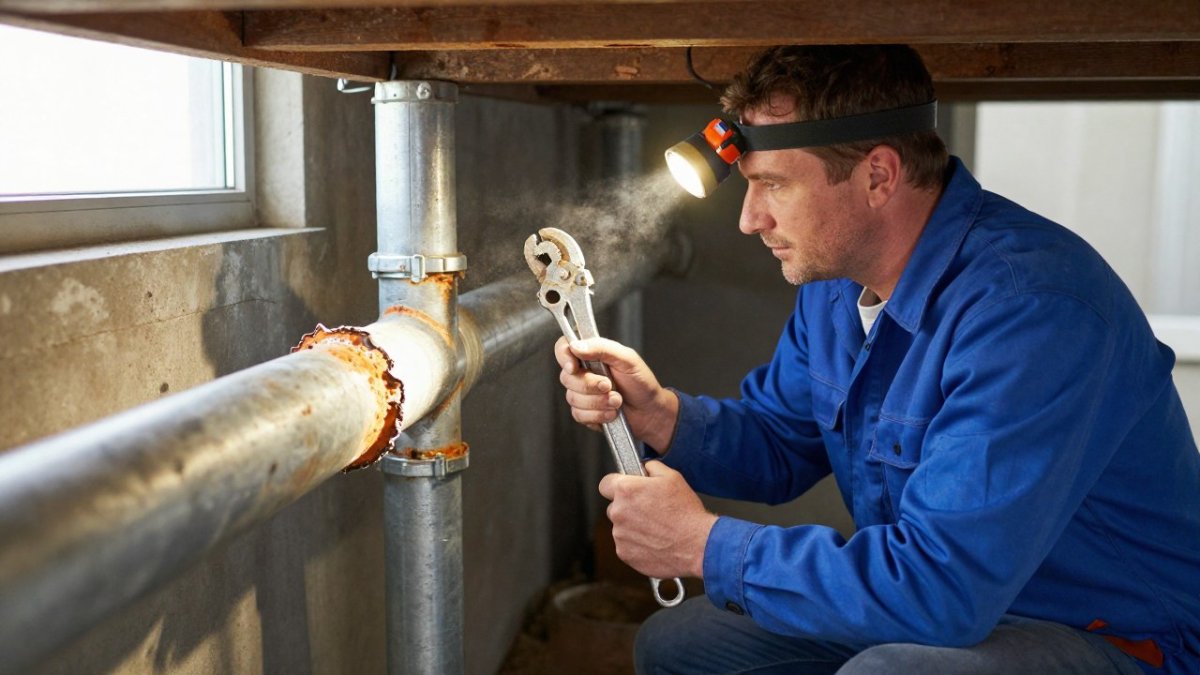
The biggest cost driver is access. An exposed pipe in a basement or crawlspace is usually a straightforward repair. A pipe inside a wall, behind tile, or under a concrete slab requires cutting, patching, and sometimes concrete work, and that labor is what pushes the bill up.
| Factor | What It Means | Effect on Estimate |
|---|---|---|
| Pipe location | Exposed vs. inside wall or slab | Harder access costs more |
| Pipe material | Copper, PEX, galvanized | Material and fitting cost |
| Water damage | Dry vs. soaked drywall, flooring | Adds cleanup and repair |
| Time of call | Business hours vs. night or weekend | After-hours rates apply |
| Emergency access | Crawlspace, attic, or slab | Labor time increases |
| Repair scope | Spot repair vs. section replacement | More pipe and fittings |
A common pattern is that the plumbing repair and the water damage cleanup are billed separately. The plumber stops the leak and restores the pipe; a restoration crew handles drying, flooring, and drywall.
Before you approve anything, ask for a written estimate that separates the pipe repair from water damage work. That split matters when you file a claim.
To avoid surprise charges, read up on how to avoid hidden plumbing fees so you know what a fair invoice looks like.
Watch out: a very low phone quote can turn into a much larger invoice once the technician opens the wall. Ask whether the estimate is a flat price for the described scope or an hourly rate plus materials, and get the answer in writing before work starts.
How Long Does Burst Pipe Repair Take
Most burst pipe repairs take a few hours once the technician arrives, but the total timeline depends on access and damage. An exposed pipe in a basement is often a same-day fix. A pipe buried in a slab or behind tile can stretch into a multi-day job.
Typical timeline:
- Diagnosis: 30 to 60 minutes
- Shutoff and containment: already done if you followed the steps above
- Pipe repair or replacement: 1 to 4 hours
- Water damage cleanup: separate, often 1 to 3 days
Fast response matters. The longer water sits, the more likely you are dealing with soaked insulation, warped flooring, and possible mold. Same-day response limits that spread.
Water Damage Cleanup, Documentation, and Insurance
Document everything before you throw anything away. Photograph the burst pipe, the water line on walls, damaged furniture, and any ruined flooring. Keep receipts for towels, fans, or temporary repairs.
Then call your homeowner's insurance company. Coverage varies by policy, so check what yours includes. Ask what your deductible is and whether they want an adjuster to visit first.
While you wait for restoration crews, handle emergency water damage the right way so you do not make the claim harder. Move valuables to dry ground, run fans and a dehumidifier, and pull up wet rugs. Do not tear out drywall before the adjuster sees it unless a plumber tells you it is necessary to stop the leak.
Book an Emergency Plumber in Hemet
When the water is off and the mess is contained, the next step is getting a qualified plumber to your door. Aim Plumbing California serves Hemet and the surrounding area with emergency plumbing for burst pipes and leaks.
We are veteran-owned. Our commitment is to top-notch plumbing services that ensure customer satisfaction, using high-quality materials and the latest techniques. If you are ready to stop the water and start the repair, book an emergency plumber in Hemet and get a clear arrival window.
A burst pipe is stressful, but the right first moves protect your home and your wallet. If water is still flowing or you are not sure the valve is fully closed, call Aim Plumbing California now. Our team offers 24/7 emergency response, upfront written estimates, and repairs built to last, so you are not paying for the same fix twice.
Frequently Asked Questions
How much will a plumber charge for a burst pipe?
Pricing depends on where the pipe failed, how accessible it is, and whether water reached drywall or flooring. A pipe in an open basement is a different job from one buried under a concrete slab. For current prices or a quote, check the Aim Plumbing California website. Ask what is included before work starts.
Is a burst pipe considered an emergency?
Yes. A burst pipe can release hundreds of gallons in an hour and reach drywall, insulation, and electrical fixtures fast. Treat it as an emergency even if the flow looks small, because pressure behind the break often widens the split. Shut off the main valve first, then call for 24-hour service. Waiting until morning usually costs more in water damage than the repair itself.
How do I shut off the water to my house?
Find the main shutoff valve, usually near the water meter, in a utility closet, or where the supply line enters the home. Turn the handle clockwise until it stops. For a ball valve, a quarter turn is enough. If the valve is stiff or won't close fully, call an emergency plumber and shut off the meter at the curb if your water provider allows it. Open a low faucet afterward to drain remaining pressure.
What should I tell an emergency plumber when I call?
Give your address, confirm the water is shut off, and describe where the leak is and what you can see: spraying, pooling, or water-stained ceiling. Mention the pipe material if you know it, and whether any rooms lost power. Ask about arrival time and any after-hours fees up front. Clear details cut diagnosis time and help the technician load the right parts.