 Ultimate guide
Plumbing Service Guarantees Explained: What to Expect
Quick Summary
Plumbing service guarantees are written commitments from a plumber to correct defective workmanship within a stated period, usually at no extra labor charge. Coverage depends on the exact wording, including the term, whether parts are included, and the exclusions. A guarantee that lacks a stated time period or clear scope is hard to enforce.
- Ask whether the labor is covered, who covers the parts, and whether a return-visit fee applies.
- Guarantee periods commonly range from 30 days to one year on labor, according to the article.
- Freeze damage, outside debris, and homeowner-supplied parts are common exclusions to check before signing.
- Get the guarantee in writing with the term, scope, and remedy, and keep it with your invoice.
Table of Contents
- What a Plumbing Service Guarantee Actually Promises
- Warranties vs. Guarantees: Why the Difference Matters
- How Long Plumbers Guarantee Their Work
- Labor vs. Parts Coverage: What Is Typically Included
- Plumbing Warranty Exclusions to Watch For
- Why a Written Plumbing Guarantee Holds Up Better
- Verbal Promises, DIY Parts, and Fine Print Checklist
- Questions to Ask a Plumber Before Hiring
- Booking Your Next Plumbing Visit with Aim Plumbing California
- Frequently Asked Questions
What a Plumbing Service Guarantee Actually Promises
A plumbing service guarantee is a written commitment from a plumber that the work will perform as described for a stated period. Most promise to correct defective workmanship at no extra labor charge within that window. Some also cover the parts they installed. The exact promise depends entirely on the wording, which is why reading it matters more than the marketing headline.
Many homeowners assume a guarantee covers everything that goes wrong near the repair. In practice it usually covers only the specific work performed, on the specific fixture or line, during the stated term.
Watch out: a guarantee that says "satisfaction guaranteed" without stating a time period or coverage scope is hard to enforce. Ask what the guarantee actually obligates the plumber to do if the repair fails.
Warranties vs. Guarantees: Why the Difference Matters
In everyday plumbing conversations the two words get used interchangeably, but they often mean different things. A manufacturer's warranty comes from the company that made the water heater, faucet or valve, and it covers defects in that product. A service guarantee comes from the plumber and covers the quality of the installation or repair labor.
This distinction determines who you call when something fails. A cracked valve may be a manufacturer claim, while a joint that starts seeping after the plumber soldered it is the plumber's responsibility. Keeping both documents together avoids the common argument where each party points at the other.
How Long Plumbers Guarantee Their Work
Guarantee periods vary widely. Many plumbers offer 30 days to one year on labor, and some offer longer terms on specific installations. A short period is not automatically a red flag if the work is simple, but a plumber who offers no written term at all leaves you with no clear standard to hold them to.
Be realistic about what a guarantee period protects against. Learn why plumbing repairs keep failing and coming back. Problems that appear right after a repair, such as a loose connection or an incorrectly sized fitting, usually show up within the first few weeks. Failures from age or wear, like corroded supply lines, typically fall outside the labor guarantee regardless of its length.
Labor vs. Parts Coverage: What Is Typically Included
Labor coverage means the plumber returns to fix their own workmanship at no charge. Parts coverage means the replacement components are covered, either by the plumber or by the manufacturer. Many guarantees cover labor but not parts, or cover parts only under the original manufacturer's warranty.
Before you sign, ask three questions: Is the labor covered? Are the parts covered, and by whom? Is there a service call fee for the return visit? A guarantee that covers labor but charges a trip fee on every callback can cost more than you expect.
Before you sign, these three questions help you see exactly what a plumbing guarantee covers.
| Question to ask | Why it matters | What to look for |
|---|---|---|
| Is the labor covered? | Determines whether the plumber returns free to fix their own work | Labor coverage stated in writing |
| Are the parts covered, and by whom? | Parts may fall under the plumber or the manufacturer | Named party responsible for each part |
| Is there a return-visit fee? | A trip fee on every callback can add cost | Callback fee disclosed up front |
Plumbing Warranty Exclusions to Watch For
Exclusions are where most guarantee disputes begin, and the wording of an exclusion clause matters more than the headline promise. A labor guarantee typically covers only the plumber's own workmanship on the specific fixture or line named in the invoice. Anything outside that scope is fair game for the plumber to decline.
Pre-existing conditions. If the plumber repairs a supply line but the shutoff valve behind it was already corroded, a later leak at that valve is usually excluded because the failure originated in a component the plumber did not touch. Ask the plumber to note any pre-existing conditions on the estimate so the boundary is documented.
Freeze damage. Burst or split pipes from freezing are almost universally excluded from labor guarantees, because the failure is attributed to weather and homeowner preparation rather than workmanship. Some agreements reinstate coverage only if the homeowner can show the heat was maintained and the line was drained per the plumber's instructions.
Clogs from outside debris. A guarantee on a drain cleaning typically covers the line the plumber cleared, not the whole drain system. If roots, grease, or flushed wipes cause a repeat blockage upstream or downstream of the cleared section, the plumber can treat it as a new service call.
Municipal supply changes. Pressure spikes, sediment from a main break, and water-quality shifts from the utility are commonly excluded because the plumber does not control the supply side. If your area has known pressure problems, ask whether the plumber installs a pressure-reducing valve and whether that valve carries its own guarantee.
Work performed by others. Any repair, adjustment, or modification by a different plumber, a handyman, or the homeowner typically voids the labor guarantee on the affected fixture. This is the exclusion that catches the most homeowners, because a small DIY adjustment after the visit can be enough for the original plumber to decline a callback.
Homeowner-supplied parts. This is the exclusion most guides gloss over, and it is the one that causes the most friction. When you buy a faucet, cartridge, disposal, or water heater yourself and hire a plumber to install it, many plumbers will guarantee the labor but expressly disclaim the part.
Watch out: a verbal assurance that "we'll take care of it" does not override a written exclusion for homeowner-supplied parts.
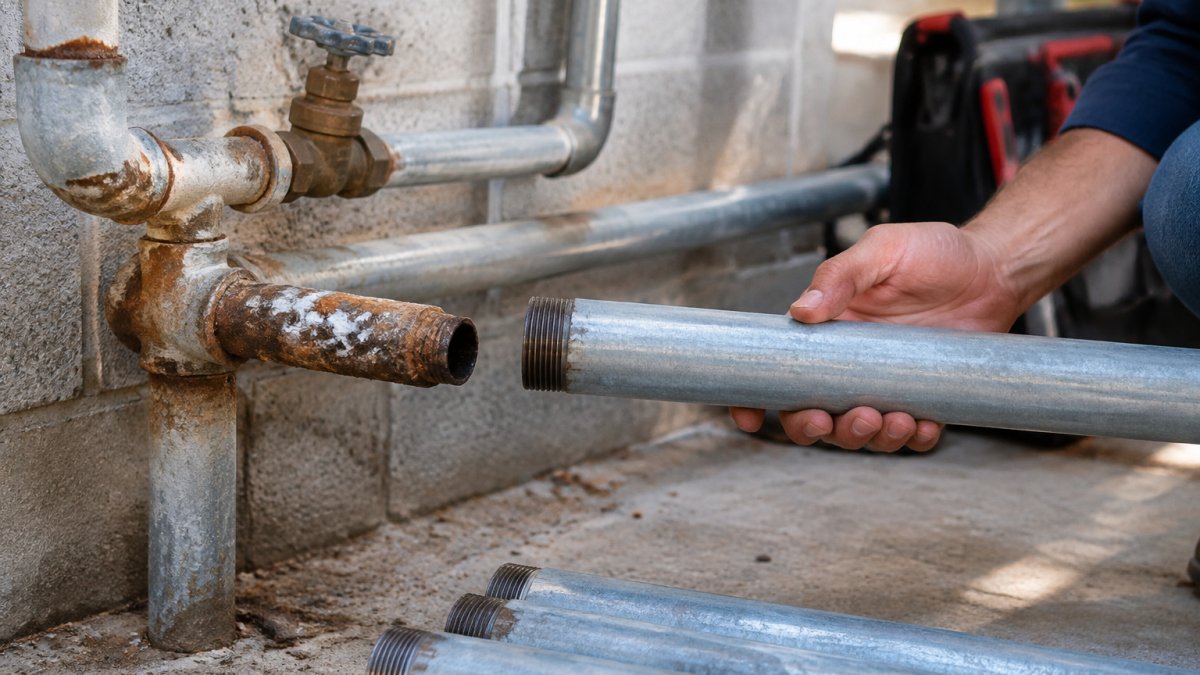
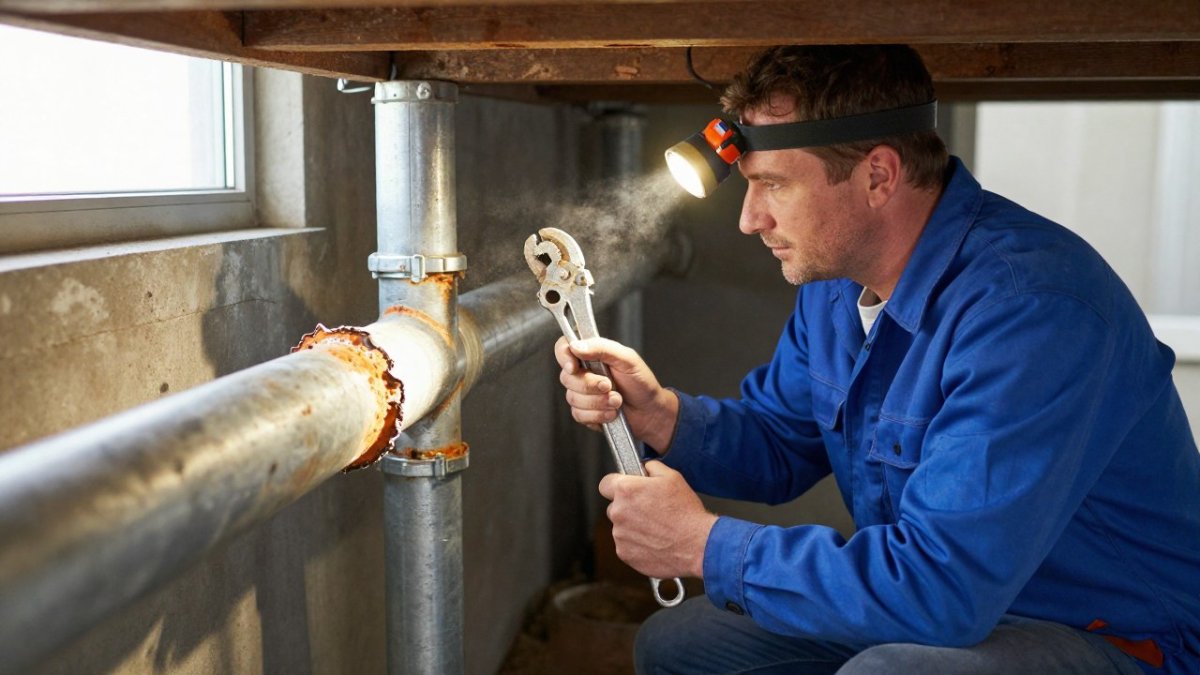
Normal wear and tear. Corroded supply lines, aged shutoff valves, and deteriorating galvanized or polybutylene piping fail from age, not workmanship. Most labor guarantees exclude these failures regardless of term length.
Consequential damage. Water damage to flooring, drywall, or cabinetry is usually excluded from the service guarantee and handled instead through the plumber's liability insurance. Ask for a certificate of insurance before work starts so you know which channel handles damage if a repair fails.
Before you sign, read the exclusion list line by line and ask the plumber to explain any phrase you do not understand in plain terms.
Why a Written Plumbing Guarantee Holds Up Better
A written guarantee is easier to enforce than a verbal promise for a reason that has little to do with trust and everything to do with proof. In a dispute, the question is not whether the plumber is honest but whether you can show what was promised, when, and by whom. A written guarantee answers those questions on its face. A verbal promise usually cannot.
What a court or licensing board looks for. When a homeowner files a complaint with a state contractor licensing board or pursues a small-claims action, the decision usually turns on four elements: the scope of work, the term of the guarantee, the remedy the plumber agreed to provide, and the date the work was completed. A written guarantee that names the fixture or line, states a term in days, months, or years, describes the remedy (return visit, repair, or refund), and is dated gives a decision-maker something concrete to apply. A verbal promise leaves each of those elements open to recollection.
Verbal guarantees are enforceable in principle but hard to prove in practice. Most states do not require a guarantee to be in writing to be legally binding, and an oral promise can be enforceable as a contract term. The practical problem is evidentiary. Without a document, a homeowner typically has only their own testimony, and the plumber has theirs.
State consumer protection rules can override contract language. Many states limit what a contractor can disclaim in a residential service contract, particularly around implied warranties of workmanlike performance. A clause that purports to disclaim all liability for defective workmanship may be unenforceable in some jurisdictions even if the homeowner signed it. The rules vary by state, so check your state's contractor licensing board and your state attorney general's consumer protection division for the standards that apply where you live. Those agencies publish complaint processes and, in many states, searchable license records you can use to verify the plumber before hiring.
The elements of an enforceable written guarantee. A guarantee that holds up in a dispute usually contains the following, and you should ask for each one before work begins:
- The legal name of the plumbing business and its license number
- The specific work performed, described by fixture or line, not by general category
- The start date of the guarantee term and the length of the term
- What is covered (labor, parts, or both) and who supplies each
- What is excluded, stated in plain language
- The remedy the plumber will provide if the work fails
- How to request service under the guarantee and any callback fee
- A signature or authorized acceptance from the plumber
If any of those elements is missing, ask the plumber to add it before you sign. A plumber who resists putting the term and remedy in writing is telling you something useful about how a future claim will be handled.
Keep the paper trail together. Store the written estimate, the signed guarantee, the final invoice, and any text or email messages about the work in one place. If a failure occurs, the first question any licensing board or small-claims court will ask is what the parties agreed to, and the paper trail answers it. Photograph the work area before and after the visit as well; a dated photo of a failed joint is far more persuasive than a description months later.
Watch out: a guarantee that says only "satisfaction guaranteed" with no term, scope, or remedy is difficult to enforce because it does not obligate the plumber to any specific action. Ask the plumber to write down what they will actually do if the repair fails, and keep that document with the invoice.
Verbal Promises, DIY Parts, and Fine Print Checklist
Use this checklist before accepting any plumbing job:
- Guarantee term is stated in writing, in days, months or years
- Labor coverage and parts coverage are listed separately
- Service call or trip fees for callbacks are disclosed
- Exclusions are listed, including freezing, outside debris and DIY parts
- Any parts you supplied are noted with who is responsible for them
- The written estimate and final invoice match
- The plumber's license number and insurance details are on the paperwork
- You have a copy of the signed guarantee
Read the fine print for phrases like "subject to availability," "at our discretion," or "normal wear and tear." These give the plumber room to decline a claim, so ask what each one means in practice before you agree. Learn how to avoid hidden plumbing fees.
Questions to Ask a Plumber Before Hiring
Asking the right questions up front prevents most guarantee disputes. Good questions include: Guidance on choosing veteran-owned plumbing services. Verify your plumber's warranty coverage step by step.
- How long is your labor guarantee, and is it in writing?
- Do you charge a service fee for callbacks under the guarantee?
- Which parts are covered by you, and which by the manufacturer?
- Are you licensed, bonded and insured for this work?
- What is your process if the repair fails after the guarantee expires?
When researching local plumbers, check their licensing status with your state board and read recent reviews that mention callbacks. Use this vetting guide to find reliable local plumbers. Hiring someone who answers these questions clearly is a strong sign they stand behind their work.
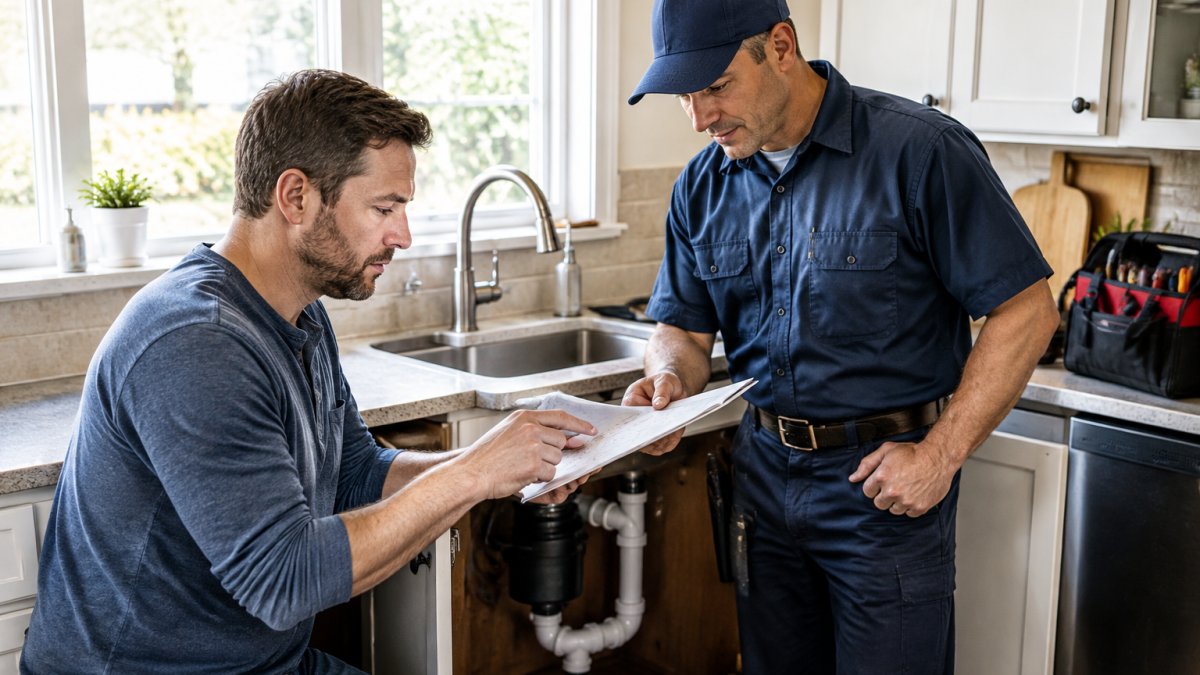
Booking Your Next Plumbing Visit with Aim Plumbing California
If you want a plumbing guarantee you can read and understand before any work starts, contact Aim plumbing California. Our crew uses high-quality materials, so ask us about our current warranty terms before work begins. Call our office or request a quote on our website to schedule your visit.
Frequently Asked Questions
How long do most plumbers guarantee their work?
Guarantee periods vary widely by provider and by the type of job. Many plumbing companies offer a workmanship guarantee that covers their labor for a set period, often somewhere between 30 days and one year, while manufacturer warranties on fixtures and parts can run much longer. Pricing and terms depend on the scope of the job, so ask for the exact period in writing before work begins. Aim Plumbing California can provide current guarantee terms for your specific project through a direct quote.
What should a plumbing service guarantee cover?
A solid plumbing service guarantee should state whether it covers labor, parts, or both, and for how long. It should also explain what happens if the same problem returns, including whether the plumber will return to fix it at no additional labor charge. Look for clear language about the workmanship being repaired and the parts being replaced if they fail due to installation error. Vague promises like 'we stand behind our work' without specifics are hard to enforce.
What is the difference between a plumbing warranty and a guarantee?
A guarantee is usually a promise from the plumbing company about its own workmanship, while a warranty is typically a manufacturer's promise about a product's performance. Both matter, but they come from different parties and cover different risks. A plumber's guarantee may not cover a defective water heater, and a manufacturer warranty may not cover a bad installation. Knowing which is which helps you know who to call when something fails.
Does a plumbing guarantee cover parts, labor, or both?
It depends on the written terms. Some guarantees cover only labor, meaning you pay for replacement parts if they fail. Others cover parts and labor for a set period, and some cover only specific components. Ask whether the parts guarantee comes from the plumber or the manufacturer, and whether you are responsible for shipping or restocking fees. Get the answer in writing so there is no dispute later.
What exclusions should I look for in a plumbing guarantee?
Common exclusions include damage from freezing, abuse, neglect, improper maintenance, and modifications made by someone other than the installer. Many guarantees also exclude parts that you supplied yourself, which matters if you bought fixtures online to save money. Read the fine print for any clause that voids coverage if an outside plumber works on the same system. Ask for the exclusions list before you sign.
Are plumbing guarantees transferable to a new homeowner?
Sometimes. Some workmanship guarantees are tied to the property rather than the original customer, while others end when the home is sold. Manufacturer warranties often allow transfer with registration, though terms vary. If you are buying a home, ask the seller for any plumbing paperwork and confirm the guarantee terms in writing with the original provider.
How can I tell whether a plumber's guarantee is reliable?
A reliable guarantee is specific, written, and backed by a business that will still be operating when you need it. Check that the plumber is licensed and insured, ask how claims are handled, and confirm whether they return for warranty callbacks without surprise charges. Reviews that mention warranty follow-through are useful. Avoid guarantees that depend on the customer proving fault in a way that is difficult to document.
What questions should I ask before accepting a plumbing estimate?
Ask whether the estimate is flat-rate or hourly, what is included in the service call fee, and what could change the final price. Confirm whether the quote covers parts, labor, permits, and cleanup. Ask what guarantee applies to the completed work, how long it lasts, and what it excludes. A written estimate with these details helps prevent the common problem of a final bill far above the original quote.